…somewhere there’s music, How near how far?

Born in Waukesha, Wisconsin in 1915 (his mother was related to both the makers of the Stutz automobile and the founders of the Valentin Blatz Brewing Company), Lester William Polsfuss began playing the harmonica at age eight.  After learning to play the guitar (having failed at banjo) as an adolescent, he invented the neck-worn harmonica holder, which is still broadly used and manufactured to this day using his basic design.

By the age of 13 he was playing semi-professionally at area roadhouses and before dropping out of high school to join a Western Swing band he had figured out a way to amplify his acoustic guitar by wiring a phonograph needle to a radio speaker.  By the age of 19 Les Paul, as he now billed himself, had moved to Chicago and begun to play jazz and blues.

Over time his guitar style became so strongly influenced by Django Reinhardt that he traveled abroad to befriend the “Gypsy virtuoso” after the war and (by then a household name) furnished his headstone when Reinhardt died from a brain hemorrhage in 1953.  An incredibly innovative player, with trills, licks, fretting techniques and chording sequences, Les Paul stood out amongst his contemporaries (Time magazine named him one of the ten best electric guitar players of all-time in 2009) and, he too became a huge influence…on countless guitarists that followed. As the manager of the Andrews Sisters (with whom Paul worked in the 1940s) once observed, “Watching his fingers work was like watching a locomotive go.”

In 1948 that “locomotive” was derailed for well over a year on icy Route 66 near Davenport, Oklahoma. His wife and singing partner Mary Ford was driving their Buick convertible when it skidded and rolled over and over, down into a creek bed.  Lucky to be alive, Paul had shattered his right elbow and arm so severely that the doctors gave him the choice of amputation or having it all fused in one position.  His choice was to have the arm set at an angle of just under 90 degrees, which would eventually allow him to pick and cradle his guitar.

Of course, Les Paul is also remembered for his numerous inventions and innovations, such as overdubbing, delay effects and multi-track recording…and especially as the man who pioneered the solid-body electric guitar, making that Rock n Roll sound possible.

Back in the 1930s Paul had become frustrated with acoustic-electric guitars, which hindered his improvisation. The main impediments were “feedback” as the acoustic body didn’t resonate very well with amplified sound and “sustain” as there was little dissipation from the instrument’s strings, which meant that not much sound generated through the guitar’s body.

Experimenting in his Queens, NY apartment, his first attempt at a solid-body instrument was an actual 4” X 4” pine log, taken from a train rail, with an attached guitar neck, a simple hard-tail bridge and pickups.  Immediately dubbed “The Log” Paul later installed sawn-off body parts from an Epiphone semi-accoustic guitar solely for the sake of a more convincing appearance.
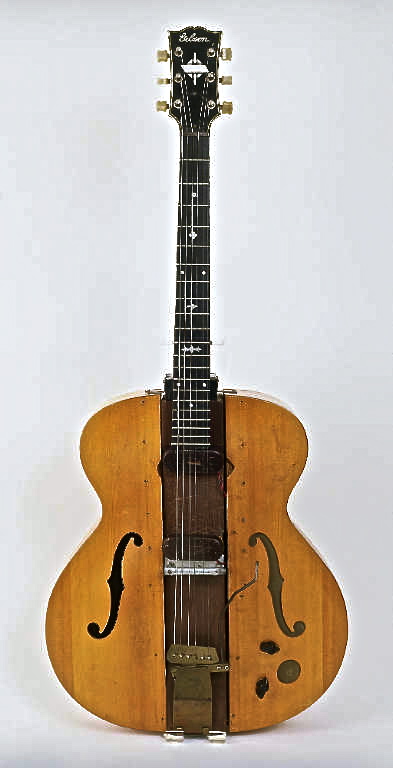
As was confirmed when it was recently displayed in the Smithsonian “The Log” was an ugly instrument, but despite it’s clunky appearance (Paul’s next prototype was called “the clunker” by the way) audiences were hugely impressed with its volume and the never-before-heard sounds that could be created with it.

In 1946 Paul took his prototype to the Gibson Guitar Corporation and although the company didn’t use his exact design it was very happy to work with him and especially to use his well-known name to promote the first ever line of solid-body guitars in the 1950s. 
“Les Paul” guitars have long been a sought after brand ever since, especially for legions of popular musicians, many of them playing their own customized models.  While “The Log” is now priceless, an original run-of-the mill ’52 Gibson Les Paul STD Gold Top can still be had for a mere $25,000.

Recognized as an “architect” and “key inductee” to the Rock and Roll Hall of Fame, along with Sam Phillips and Alan Freed, among his many honors Les Paul is also one of a handful of artists with his own permanent, stand-alone exhibit.

Written by Morgan Lewis and Nancy Hamilton and first featured in the 1940 Broadway revue, “Two for the Show” today’s selection has been a standard ever since.  However, the most popular version of them all remains this one by Les and Mary Ford (the couple had 16 top-ten hits between 1950 and 1954) recorded on 4 January 1951.

As an aside, I took the photo above of the Les Paul trio playing this song, one autumn evening in 1991, at Fat Tuesday’s in New York, where he reliably played every Monday for years.

LISTEN TO TODAY’S SELECTION – Monday 13 August

How High The Moon

 Somewhere there’s music

How faint the tune

Somewhere there’s heaven

How high the moon

There is no moon above

When love is far away too

Till it comes true

That you love me as I love you

 Somewhere there’s music

How near, how far

Somewhere there’s heaven

It’s where you are

The darkest night would shine

If you would come to me soon

Until you will, how still my heart

How high the moon
 Somewhere there’s music

How faint the tune

Somewhere there’s heaven

How high the moon

The darkest night would shine

If you would come to me soon

Until you will, how still my heart

How high the moon
* Do any human beings ever realize life while they live it? — every, every minute?

According to Aaron Copland, a successful film score should be “secondary in importance to the story being told on the screen” without diverting the viewer’s attention from the action.  Yet it should add to the movie’s dramatic and emotional content. And that’s why today’s selection, both inspirational and soothing, is such a splendid piece to write and work by.

Although such classics as “Rodeo”, “Appalachian Spring” and “Fanfare for the Common Man” were yet to come, the future “Dean of American Composers,” was already well-respected when he arrived in Hollywood in 1937, having written admirable pieces for Broadway, for national radio and (motivated by the poverty faced by many children during the Depression) for young audiences.  Aged 37, he felt the film industry would help to provide a broader audience for the more mature works he was in the process of writing.

Unfortunately the studios had their own way of doing things and were well entrenched in the habit of leaving the best parts of a purposely written score on the cutting room floor. It took a full two years before he finally met a director who agreed not to interfere with his orchestration. The resulting 1939 score was for Steinbeck’s “Of Mice and Men” directed by Lewis Milestone and Copland received two Academy Award nominations (“Best Score” and “Original Score”).

In addition to a burnished reputation and a wider audience, the recognition from that first effort enabled Copland to become one of the highest paid film composers in Hollywood (earning him upwards of $15,000 a film, a tidy sum in those days).  “I thought if I was to sell myself to the movies, I ought to sell myself good,” he later said, well remembering the near hand-to-mouth existence of helping countless cash-strapped productions throughout the early ‘30s.

It also allowed Copland the freedom to greatly enhance the way a movie score was used, by utilizing it to illustrate a character’s thoughts, set the atmosphere, provide continuity and shape emotion, none of which had been done with silent and early talking film scores. His influence is heard onscreen to this day.

Yet another Academy Award for Best Score nominee, today’s selection was written for the 1940 cinematic version of Thornton Wilder’s wonderful play “Our Town”.  Set in a small New Hampshire town in the early 20th Century, the film was faithful to the original production except for two noteworthy changes.  First, as you’ll see from this somewhat muddy YouTube clip of the enchanting opening scene, it used scenery, whereas the stage production deliberately did not.

Secondly, the film’s producer worked closely with Wilder to create a far happier (“Hollywood”) ending, by altering the poignant third act (entitled “Death and Eternity”). This was a legitimate consideration, as was borne out a few years later when the stage production was famously banned in East Berlin on the grounds that it was so upsetting that it might inspire a wave of suicides (!)

* Note: The title quote above was plaintively spoken by Emily, one of the two main characters and a young mother who died giving birth. She has come back to earth for a day to spend time with those she loves, although they don’t know she’s there.

Part of the “Copland Conducts Copland” Collection with the London Symphony Orchestra, this 1967 recording features the main theme to Aaron Copland’s “Our Town”.  Now get to work.

 LISTEN TO TODAY’S SELECTION – Sunday 12 August

…screaming, let me out

Today’s selection comes at the request of a friend who asked for something by this group, whose albums have spent more time on the UK record charts than any other musical act in history and whose flamboyant lead singer (with a four octave vocal range) was “Britain’s first Asian rock star.”

Born in Zanzibar (then a British protectorate, now part of Tanzania) in 1946, to parents who were Parsi, Farrokh Bulsara, spent much of his childhood in India where he learned to play the piano at seven and later attended boarding school.  When Zanzibar descended into bloody revolution resulting in the deaths of thousands of its Arab and Indian residents, the then 17 year old’s family fled to suburban London.

Recognized there as a British Subject, Farrokh, who now went by the name of Freddie, studied art and design at Ealing Art College, where he became friends with the members of a band named Smile. In 1970, after some line-up changes, he was encouraged to join the group although the others were hesitant about his prevailing suggestion that they change their name.

As he later explained, “I thought up the name Queen. It’s just a name, but it’s very regal obviously, and it sounds splendid. It’s a strong name, very universal and immediate. It had a lot of visual potential and was open to all sorts of interpretations. I was certainly aware of gay connotations, but that was just one facet of it.”

Freddie also decided to adopt a new stage name, choosing “Mercury” from a line in one of his own songs, “My Fairy King” which went, “Mother Mercury, look what they’ve done to me.”

In 1971 the band settled on a permanent bass player (John Deacon) and played their first show, at a local college, with the “classic” line-up of Mercury, Deacon, Brian May and Roger Taylor.

Queen, of course went on to become one of the biggest stadium rock bands in the world, releasing a total of 18 Number One albums, selling upwards of 300 million of them, with 18 Number One singles and ten Number One DVDs. Fronted by Freddie Mercury, their performance at the 1985 Live Aid concert is regarded as one of the greatest in rock history.

“…. Apart from the audiences at the transatlantic events (72,000 at Wembley Stadium in London; 99,000 at the John F Kennedy Stadium in Philadelphia), it was estimated that another two billion people in 60 countries watched it on television…Competition was fierce: the “global jukebox” charity event, to raise funds to help victims of a devastating Ethiopian famine, also featured U2, Sting, Mick Jagger, Dire Straits, David Bowie, The Who, Elton John, Eric Clapton, Led Zeppelin and Bob Dylan.

And, for once, it was a gig that Queen had practically no control over. They would be using the same sets, lights, backdrops and sound system as all the other artists. However, they seized on the day as a chance to show that they were about more than just pyrotechnics, timing their rehearsals down to the last second.

“Our opportunity to show that it’s the music first and foremost,” as guitarist Brian May put it. Queen wanted to do Live Aid because of the cause, but also because they relished the chance to pitch themselves against other bands: “Everyone will be trying to outdo each other, which will cause a bit of friction. It makes me personally proud to be a part of it,” said lead singer Freddie Mercury.

The band did not ask to open or close the show. Instead, they cannily requested a 6pm slot – prime time in the UK and, five hours behind, perfect for the US audience before there was any danger of viewers lapsing into big-band fatigue. Their set squeezed six of their best-known hits into 20 minutes, shortening some of the songs until it became almost a seamless medley. “Bohemian Rhapsody” preceded “Radio Ga Ga”, “Hammer to Fall”, “Crazy Little Thing Called Love”, “We Will Rock You” and “We Are the Champions”.

Reaction to Queen’s performance was extraordinary. In the stadium, the crowd was floored, as were the other acts: Elton John rushed into their dressing room afterwards, screaming that they had stolen the show. Their back catalogue suddenly took off again across the world….” ~Adapted from “40 Years of Queen” by Harry Doherty~

Although he had no formal vocal training, Mercury (who would sadly succumb to AIDS In 1991) had a voice, according to his biographer that would escalate “within a few bars from a deep, throaty rock-growl to tender, vibrant tenor, then on to a high-pitched, perfect coloratura, pure and crystalline in the upper reaches”.

Timid and reserved in private, especially when around those he didn’t know, Mercury was quite the opposite onstage, as was notoriously noted in the suicide note of a great admirer, Kurt Cobain “…when we’re backstage and the lights go out and the roar of the crowd begins, it doesn’t affect me the way in which it did for Freddie Mercury, who seemed to love and relish the love and adoration of the crowd.”

Primarily written by Mercury and released in 1986 on the album/DVD “Live at Wembley Stadium”, today’s selection was first recorded by Queen and David Bowie and featured on Queen’s album “Hot Space” in 1982 when it reached No. 1 on the UK Singles Chart.

With a bassline that would be memorably “sampled” by Vanilla Ice for his single “Ice Ice Baby”, bassist John Deacon had apparently played the riff over and over throughout the recording sessions.  However when the band returned from dinner and it was actually time to utilize it Deacon was suddenly stymied. Fortunately drummer, Rodger Taylor remembered it well and was able to alleviate some of the pressure there in the studio.

 LISTEN TO TODAY’S SELECTION – Saturday 11 August

Under Pressure

 Pressure pushing down on me

Pressing down on you no man ask for

Under pressure that burns a building down

Splits a family in two

Puts people on streets

 It’s the terror of knowing

What this world is about

Watching some good friends

Screaming let me out

Tomorrow gets me higher

Pressure on people – people on streets

Chippin’ around, kick my brains across the floor

These are the days, when it rains it pours

People on streets – people on streets

It’s the terror of knowing

What this world is about

Watching some good friends

Screaming let me out

Tomorrow gets me higher, higher, higher…

Pressure on people – people on streets

Turned away from it all like a blind man

Sat on a fence but it don’t work

Keep coming up with love but it’s so slashed and torn

Why, why, why?

Love

Insanity laughs under pressure we’re cracking

Can’t we give ourselves one more chance?

Why can’t we give love that one more chance?

Why can’t we give love, give love, give love..?

‘Cause love’s such an old-fashioned word

and love dares you to care for

The people on the edge of the night

And love dares you to change our way of

Caring about ourselves

This is our last dance

This is our last dance

This is ourselves

Under pressure

Under pressure

Pressure

…every year’s a souvenir, that slowly fades away

We saw him back in 2002 during one of his fabulous “Face to Face” performances with Elton John, a touring partnership that, beginning in 1994 and sporadically continuing to this day, has proven to be the most successful and longest running concert tandem in pop music history. Mind you, like Elton, he’s had plenty of practice. Last year marked the 40th anniversary of the release of his first album, “Cold Spring Harbor” in 1971.

Born in the Bronx in 1949, the son of an accomplished classical pianist, William Martin Joel reluctantly began piano lessons at an early age at the insistence of his mother. As his musical interest grew, but not so much his interest in sports, he began to be bullied and took up boxing as a result, eventually competing successfully on the Golden Gloves circuit where he won 22 matches.  Joel hung up his gloves soon after the 24th bout however, having walked away with a broken nose.

By then he and his divorced mother had long since moved to Hicksville on Long Island where he dropped out of high school and managed to land a job at a piano bar to help make ends meet.  As he later recounted, “I told them, ‘to hell with it if I’m not going to Columbia University, I’m going to Columbia Records and you don’t need a high school diploma over there’.”

In 1992 Billy Joel, who had (by then) achieved 33 Top 40 hits, all self-written, was awarded his diploma at Hicksville High’s annual graduation ceremony, 25 years after he had left, having submitted the requisite essays to the Hicksville School Board.  Today’s selection, not one of those hits, was featured on his third studio album…on Columbia Records, “Streetlight Serenade” in 1974.

LISTEN TO TODAY’S SELECTION – Friday 10 August

Souvenir

A picture postcard

A folded stub

A program of the play

File away your photographs

Of your holiday

 And your mementos

Will turn to dust

But that’s the price you pay

For every year’s a souvenir

That slowly fades away

Every year’s a souvenir

That slowly fades away

How the Coliseum Got its Name

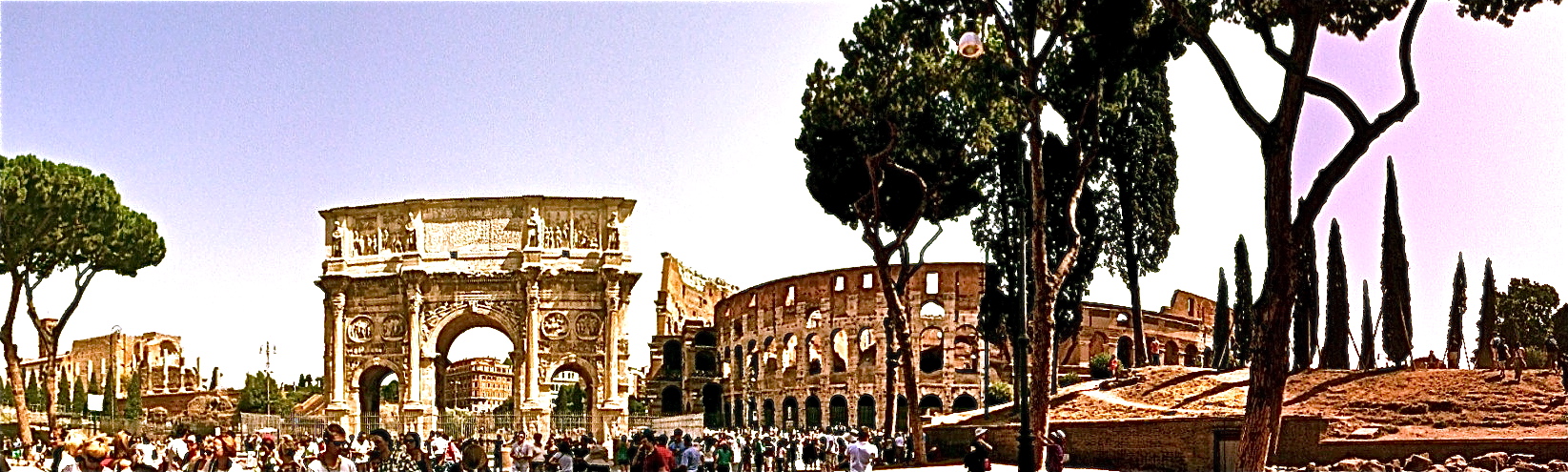
Erected by decree of Emperor Nero between AD 64 and 68 and standing over 100 feet tall, the bronze athletic statue, Colossus of Neronis was relocated by Emperor Hadrian (with the use of 24 elephants) in AD 128 from its original location to make way for the Temple of Venus and Rome (the ruins to the left) and next to the Flavian Amphitheatre (the rightmost ruins).  In time the Colossus lent its name to the 80+ acre amphitheatre, which is now known to the world as the Coliseum.

Lasting into the Middle Ages between the Arch of Constantine, here in the foreground and the Coliseum, it was once said, “As long as the Colossus stands, Rome will stand, when the Colossus falls, Rome will also fall.”  It is believed the great statue was hauled down during the Sack of Rome in AD 410 and its copper scavenged.

An acquired taste perhaps, but Italian design rules

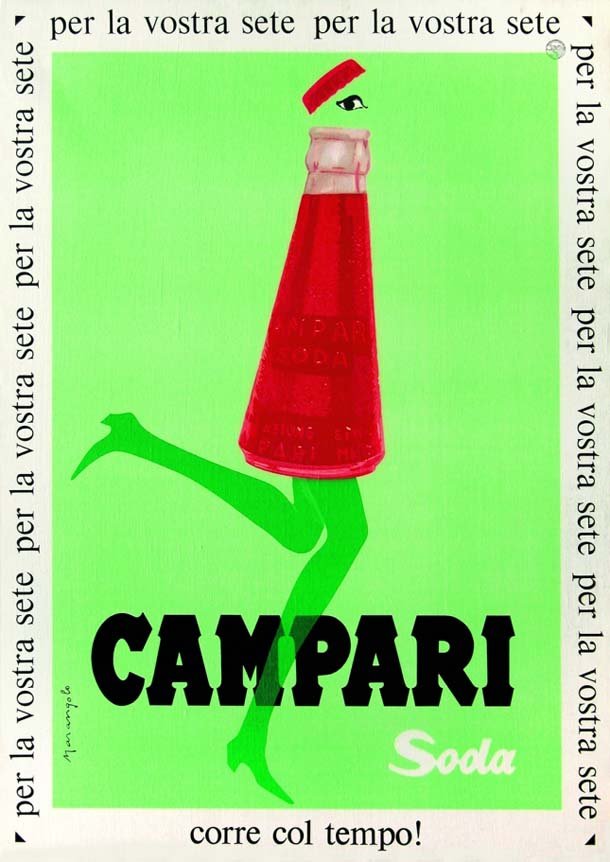
If you’re a classic cocktail fan, you no doubt are already familiar with a key ingredient in the Garibaldi and Negroni cocktails.  Campari bitters, of course, that deep red infusion of herbs and fruit in water and alcohol.  Rarely imbibed neat (bleh!) it can be downright delightful when blended with citrus juice, wine or soda water.

As a matter of fact, Campari soda has been marketed as a premixed drink here in Italy since 1932, the first “single dose” product ready for consumption and the “perfect pre-dinner mix” of Campari and soda.  Sold in a unique cone shaped bottle designed by Futurist artist, Fortunato Depero, it exemplifies why Italian design leads the world in so many ways.

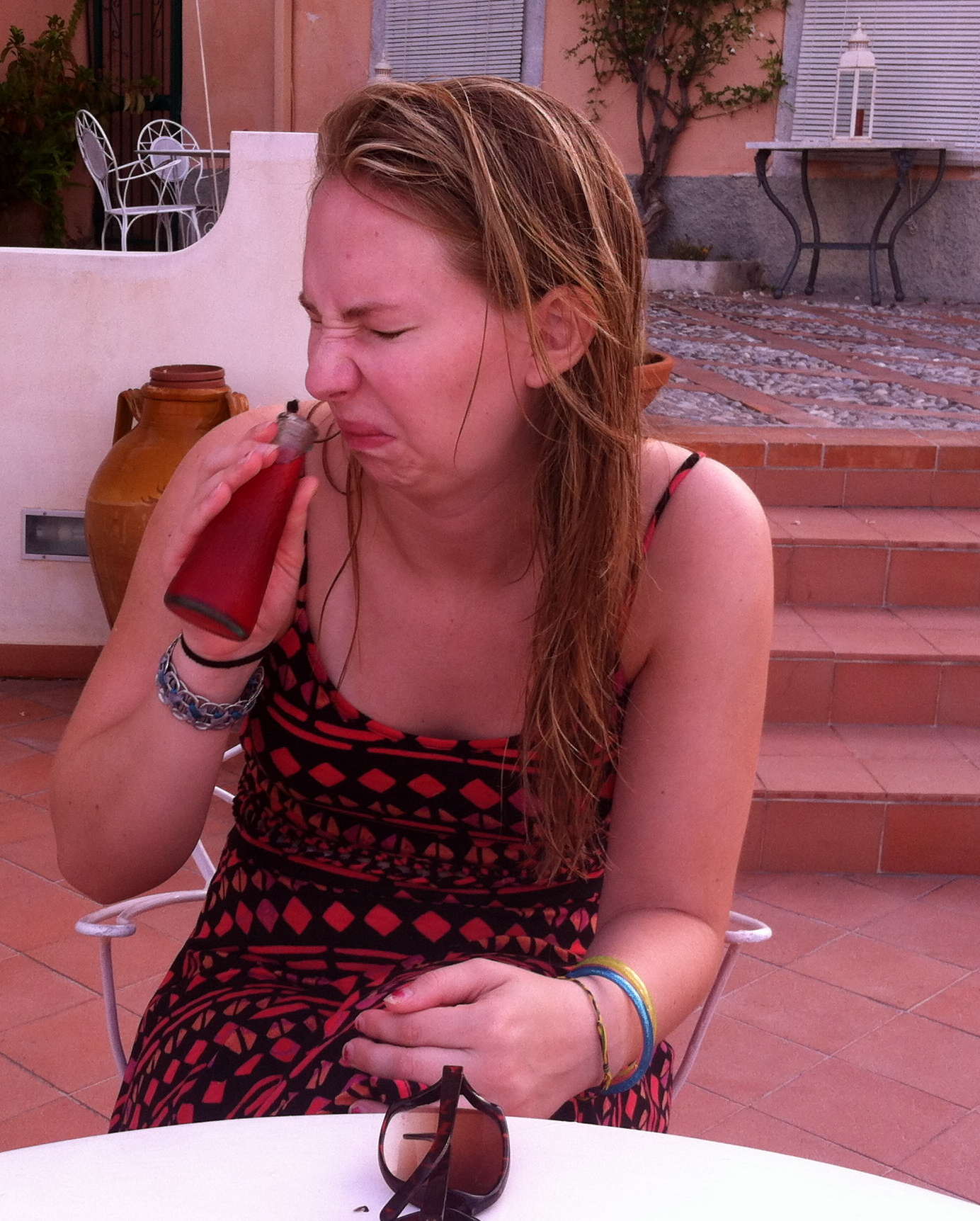
As for the drink itself, while some of us find it delightfully refreshing on a hot, sticky day, it remains an…. acquired taste. Regardless of your preference, “Cin Cin”!

…I love you, my town…you’ll always live in my soul

It’s a splendid concept, take 34 leading folk and country musicians from both sides of the North Atlantic and gather them in a stunning Georgian-era Scottish mansion for collaborative live performances, featuring music from Scotland, Ireland, England and North America. Then record, film and broadcast the results as a season of half hour TV episodes

Originally produced in 1995 as a joint BBC Scotland/RTE Ireland television series to celebrate the close relationship between British and North American traditional music, The Transatlantic Sessions have been referred to as “the greatest backporch shows ever”.

Built by Sir Robert Glasgow in 1817 (and a fine hotel since 1982), it was all filmed and recorded at Montgreenan Mansion House in Ayrshire, Scotland; hard-by the Firth of Clyde. The venerable Sir Robert, like other Glasgow “entrepreneurs” alas, made his fortune in the shipping trade by plying the shameful triangular route between Britain, Africa and the sugar plantations of the West Indies.

Since 1995 four additional series were filmed (‘99,’07, ‘09, ’10) with the most recent ones broadcast on BBC 4, which has been a channel since 2002. Although many of the featured musicians are unknown to us (or at least us dilatants) on the North American side of the Atlantic there have been some notable names through the years, including: James Taylor, Rosanne Cash, Nanci Griffith, Martha Wainwright and Ricky Skaggs.

There were some notable names in that original gathering as well, particularly: Emmylou Harris, Kate and Anna McGarrigle, Mary Black, John Martyn and Iris DeMent.  Now, closing in on 20 years later, its pleasing to see the relative youthfulness of many of these performers… especially the late Kate McGarrigle. I’m definitely adding it to this year’s Christmas list and for those who are interested I have included a complete ’95 series rundown at the bottom of this post.

As we know from prior postings, Iris DeMent was born in Paragould, Arkansas in 1961 (but bred in Cypress, California) and was the youngest of 14 children in a Pentecostal household. After college she worked as a waitress in Kansas City while composing songs and honing her guitar and singing skills at open-mic nights, finally making the leap to Nashville where she would ultimately land a record deal.

Today’s selection is another track from her 1992 debut album, “Infamous Angel”.  This 1995 YouTube version that includes Emmylou Harris (who bears a striking resemblance to my big sister) was featured on PROGRAMME FOUR
 of the original Transatlantic Sessions.

LISTEN TO TODAY’S SELECTION – Friday 27 July

 Our Town

 And you know the sun’s settin’ fast

And just like they say, nothing good ever lasts

Well, go on now and kiss it goodbye

But hold on to your lover

‘Cause your heart’s bound to die

Go on now and say goodbye to our town, to our town

Can’t you see the sun’s settin’ down on our town, on our town

Goodnight

 Up the street beside that red neon light

That’s where I met my baby on one hot summer night

He was the tender and I ordered a beer

It’s been forty years and I’m still sitting here

 But you know the sun’s settin’ fast

And just like they say, nothing good ever lasts

Well, go on now and kiss it goodbye

But hold on to your lover

‘Cause your heart’s bound to die

Go on now and say goodbye to our town, to our town

Can’t you see the sun’s settin’ down on our town, on our town

Goodnight

It’s here I had my babies and I had my first kiss

I’ve walked down Main Street in the cold morning mist

Over there is where I bought my first car

It turned over once but then it never went far

And I can see the sun’s settin’ fast

And just like they say, nothing good ever lasts

Well, go on now and kiss it goodbye

But hold on to your lover

‘Cause your heart’s bound to die

Go on now and say goodbye to our town, to our town

Can’t you see the sun’s settin’ down on our town, on our town

Goodnight

 I buried my Mama and I buried my Pa

They sleep up the street beside that pretty brick wall

I bring them flowers about every day

But I just gotta’ cry when I think what they’d say

 If they could see how the sun’s settin’ fast

And just like they say, nothing good ever lasts

Well, go on now and kiss it goodbye

But hold on to your lover

‘Cause your heart’s bound to die

Go on now and say goodbye to our town, to our town

Can’t you see the sun’s settin’ down on our town, on our town

Goodnight

 Now I sit on the porch and watch the lightning bugs fly

But I can’t see too good, I got tears in my eyes

I’m leaving tomorrow but I don’t wanna go

I love you, my town, you’ll always live in my soul

But I can see the sun’s settin’ fast

And just like they say, nothing good ever lasts

Well, go on, I gotta kiss you goodbye

But I’ll hold to my lover

‘Cause my heart’s ’bout to die

Go on now and say goodbye to my town, to my town

I can see the sun has gone down on my town, on my town

Goodnight

Goodnight

PROGRAMME ONE


Wheels Of Love Emmylou Harris with Iris Dement & Mary Black

MacIlmoyle Jay Ungar & Aly Bain with Russ Barenberg, Molly Mason & Jim Sutherland

Ready For The Storm – Kathy Mattea with Dougie MacLean

Spencer The Rover – John Martyn with Danny Thompson

Big Bug Shuffle – Russ Barenberg

Black Diamond Strings – Guy Clark with Emmylou Harris

Guitar Talk – Michelle Wright with Kathy Mattea

Ashokan Farewell – Jay Ungar with Aly Bain

PROGRAMME TWO


May You Never – John Martyn with Kathy Mattea

Big Scioty – Aly Bain, Jay Ungar, Molly Mason, Russ Barenberg & Jerry Douglas

Ta Mo Chleamhnas Deanta – Mairead Ni Mhaonaigh with Donal Lunny

Grey Eagle – Mark O’Connor

Talk To Me Of Mendocino – Kate & Anna McGarrigle with Karen Matheson

Mexican Monterey – Savourna Stevenson with Aly Bain & Danny Thompson

By The Time It Gets Dark – Mary Black with Emmylou Harris & Declan Sinnott

Auld Lang Syne – Rod Paterson with Mairead Ni Mhaonaigh & Martyn Bennett

PROGRAMME THREE


The Loving Time – Mary Black with Declan Sinnott, Davy Spillane

Goodbye Liza Jane – Aly Bain & Jay Ungar with Russ Barenberg, Jerry Douglas & Molly Mason

Iain Ghlinn Cuaich – Karen Matheson with Donald Shaw

Turning Away – Dougie MacLean with Kathy Mattea

Boulavogue / Mrs McLeod – Davy Spillane & Aly Bain with Russ Barenberg

Let The Mystery Be – Iris DeMent

Wild Mountain Thyme – Dick Gaughan with Emmylou Harris, Kate & Anna McGarrigle & Rufus Wainwright

Far From Home / Big John McNeil – The House Band with Mark O’Connor, Martyn Bennett, Charlie McKerron,

Mairead Ni Mhaonaigh & Cathal McConnell

PROGRAMME FOUR


Going Back To Harlan – Kate & Anna McGarrigle with Emmylou Harris

Daire’s Dream – Davy Spillane with Jerry Douglas & Russ Barenberg

Canan Nan Gaidheal – Karen Matheson with Donald Shaw

Jim’s Jig / Little Cascades / Fox In The Town – Simon Thoumire & Jim Sutherland

Farewell, Farewell – Mary Black with Declan Sinnott

Cat In The Bag – Mark O’Connor with Russ Barenberg, Donal Lunny & Danny Thompson

Our Town – Iris DeMent with Emmylou Harris

Ronfleuse Gobeil – Aly Bain & Jay Ungar with Molly Mason, Russ Barenberg & Jim Sutherland

PROGRAMME FIVE


I Will – Kathy Mattea with Dougie MacLean

Will The Circle Be Unbroken – Michelle Wright, Iris DeMent & Mairead Ni Mhaonaigh

You Low Down Dirty Dog – Jay Ungar with Aly Bain, Russ Barenberg, Jerry Douglas & Molly Mason

Gentle Annie – Kate & Anna McGarrigle with Rod Paterson

Jesse Polka – Mark O’Connor with Phil Cunningham, Russ Barenberg, Donal Lunny & Danny Thompson

Green Rolling Hills – Emmylou Harris with Mary Black

The Dark Woman Of The Glen – Cathal McConnell with Aly Bain, Phil Cunningham & Russ Barenberg

Big Muff – John Martyn with Danny Thompson

PROGRAMME SIX


Hard Times – Kate & Anna McGarrigle, Rufus Wainwright, Emmylou Harris, Mary Black, Karen Matheson & Rod Paterson

MacCrimmon’s Lament – Martyn Bennett

Dublin Blues – Guy Clark with Karen Matheson

Sweet Is The Melody – Iris DeMent

A Maiden’s Prayer – Aly Bain & Jay Ungar with Molly Mason, Russ Barenberg, Jerry Douglas & Jim Sutherland

Don’t Want To Know – John Martyn with Danny Thompson

For No One – Emmylou Harris with Davy Spillane

Scotland – The House Band with Mark O’Connor, Martyn Bennett, Charlie McKerron, Mairead Ni Mhaonaigh & Cathal McConnell

PROGRAMME SEVEN


Old Fashioned Waltz – Emmylou Harris with Kate & Anna McGarrigle

Clyde To Sandyhook – Savourna Stevenson with Aly Bain

Dark As A Dungeon – Guy Clark with Rod Paterson

The Lover’s Waltz – Molly Mason

Both Sides The Tweed – Dick Gaughan with Emmylou Harris

The Reason Why I’m Gone – Michelle Wright with Karen Matheson

Uncle Sam / Rain On Olivia Town – Jerry Douglas

This Love Will Carry – Dougie MacLean with Kathy Mattea

… Oh remember who walked the warm sands beside you

Because he had played in a band as a young man back in Saint Kitts, he forbade his children from touching a guitar.  But after recognizing something special in their 14 year old daughter, his wife purchased a piano as “a piece of furniture” for their Birmingham, England apartment.  Soon after, she traded in two prams for a £3 guitar at a local pawnshop.

By the age of 15 the young girl had taught herself to play both instruments.  But the family was in financial straits, so she dropped out of school and went to work at a tool manufacturing factory where she was promptly given the sack for bringing her guitar to work and playing it during tea breaks.

And that’s when Joan Anita Barbara Armatradin (born in Saint Kitts in 1950, raised in Birmingham) began her singing career in earnest, performing her own songs whenever and wherever she could, including a concert arranged by her older brother at the University of Birmingham when she was just 16.

In 1968 Armatrading joined a repertory production of the stage musical “Hair” which eventually led her to a recording contract.

But it wasn’t until her third album in 1976 “Joan Armatrading” (featuring today’s selection) that she truly began to receive “love and affection” from fans and critics alike, both at home and abroad, thereby propelling her to become the first black British female singer/songwriter to enjoy international success, with a career that has now spanned 40 years.

  LISTEN TO TODAY’S SELECTION – Thursday 26 July

Down to Zero

Oh the feeling

When you’re reeling

You step lightly thinking you’re number one

Down to zero with a word

Leaving

For another one

 Now you walk with your feet

Back on the ground

Down to the ground

Down to the ground

Down to the ground

Down to the ground

Brand new dandy

First class scene-stealer

Walks through the crowd and takes your man

Sends you rushing to the mirror

Brush your eyebrows and say

There’s more beauty in you than anyone

Oh remember who walked the warm sands beside you

Moored to your heel

Let the waves come a rushing in

She’ll take the worry from your head

But then again

She put trouble in your heart instead

Then you’ll fall

Down to the ground

Down to the ground

You’ll know heartache

Still more crying

When you’re thinking of your mother’s only son

Take to your bed

You say there’s peace in sleep

But you’ll dream of love instead

 Oh the heartache you’ll find

Can bring more pain than a blistering sun

But oh when you fall

Oh when you fall

Fall at my door…

Oh the feeling

When you’re reeling

You step lightly thinking you’re number one

Down to zero with a word

Leaving

For another one

Now you walk with your feet

Back on the ground

Down to the ground

Down to the ground

Down to the ground

Down to the ground

 You’ll know heartache

Still more crying

When you’re thinking of your mother’s only son

Take to your bed

You say there’s peace in sleep

But you’ll dream of love instead

 Oh the heartache you’ll find

Can bring more pain than a blistering sun

But oh when you fall

Oh when you fall

Fall at my door…

…oh, well I wish I was lying in the arms of Mary

Gavin and Iain Sutherland out of Aberdeen, Scotland were a sibling folk/rock duo who’d had a couple of minor hits (most memorably “Sailing” which later became a big hit for Rod Stewart) prior to joining forces with a local rock band named Quiver in 1973.  Not unreasonably the collaborating entities began to record and tour under the new name of The Sutherland Brothers & Quiver.

Although the brothers would eventually return to being a duo when Quiver decided to go its own way, it was as a six-piece conglomeration that both groups had their greatest success, with the biggest hit of all first appearing as a track on their fourth concerted album, “Reach for the Sky” in 1975.

Written by Iain Sutherland and released as a single the following year, today’s selection peaked on the UK Charts at Number 5 and was also a big hit in much of Europe.  Surprisingly (for such a memorable song) it only made it to the Number 81 spot in the U.S. before falling off the Billboard charts…and softly back into the “Arms of Mary”

LISTEN TO TODAY’S SELECTION – Wednesday 25 July

 Arms Of Mary

The lights shine down the valley

The wind blows up the alley

Oh, well I wish I was lying in the arms of Mary

 She took the pains of boyhood

And turned them in to feel good

Oh, how I wish I was lying in the arms of Mary

 Mary was the girl who taught me all I had to know

She put me right on my first mistake

Summer wasn’t gone when I learned all she had to show

She really gave all a boy could take, Oh

So now when I get lonely

Still looking for the one and only

That’s when I wish was lying in the arms of Mary

Mary was the girl who taught me all I had to know

She put me right on my first mistake

Summer wasn’t gone when I learned all she had to show

she really gave all a boy could take

 The lights shine down the valley

The wind blows up the alley

Oh, well I wish I was lying in the arms of Mary

Lying in the arms of Mary, Lying in the arms of Mary

Lying in the arms of Mary

…don’t know what I’m going to do

After releasing their self-titled debut album in the spring of 1972, the members of Pure Prairie League spent the summer at a horse farm north of Toronto to record their second album “Bustin’ Out”. Summer’s a beautiful time to be in Southern Ontario but the main reason they were there was because lead singer and co-founder Craig Fuller was dodging the draft.

Formed in Columbus, Ohio and with some success in Cincinnati prior to landing that record deal, Pure Prairie League (PPL) got its name from a 19th Century Temperance Union mentioned in the (coincidentally titled) 1939 film, “Dodge City”.  That debut album featured a Norman Rockwell drawing of an old cowboy that had first been featured on a 1927 cover of the “Saturday Evening Post” a concept so agreeable that “Luke” as the cowboy came to be known, was featured on every PPL album from then on.

Shortly after “Bustin’ Out” was released in October of ’72, the group returned to Ohio and Craig Fuller was tried for draft evasion.  Although he would eventually receive conscientious objector status and a full pardon by President Gerald Ford, he was sentenced to six months in jail in early ’73 and was forced to quit the band.  In the years ahead he would come to re-kindle his music career but would miss out on the national prominence that Pure Prairie League would soon come to enjoy…national prominence that was mainly due to a girl named Amie.

Included as a track on “Bustin Out” and preceded by the accompanying “Falling in and Out of Love” as a doublet of sorts,  “Amie” was written and sung by Fuller about an on-again/off-again relationship he’d once had. Although it initially received little airplay it became a college tour favorite for PPL after Fuller’s departure, with radio stations receiving an increasing number of requests for the song. Finally released as a single in late 1974 it peaked at Number 27 on the Billboard charts in the spring of ’75, nearly three years after it was recorded.

 LISTEN TO TODAY’S SELECTION – Tuesday 24 July

Amie

I can see why you think you belong to me

I never tried to make you think or let you see one thing for yourself

But now you’re off with someone else and I’m alone

You see I thought that I might keep you for my own

Amie, what you wanna’ do

I think I could stay with you

For a while maybe longer if I do

 Don’t you think the time is right for us to find

All the things we thought weren’t proper could be right in time

And can you see which way we should turn together or alone

I can never see what’s right or what is wrong

Will it take too long to see

 Amie, what you wanna’ do

I think I could stay with you

For a while maybe longer if I do

 Amie, what you wanna’ do

I think I could stay with you

For a while maybe longer if I do

Now it’s come to what you want you’ve had your way

And all the things you thought before just faded into gray

And can you see that I don’t know if it’s you or if it’s me

If it’s one of us I’m sure we both will see

Won’t you look at me and tell me

 Amie, what you wanna’ do

I think I could stay with you

For a while maybe longer if I, longer if I do

Yeah, now

 Amie, what you wanna’ do

I think I could stay with you

For a while maybe longer if I do

 I keep falling in and out of love with you

Falling in and out of love with you

Don’t know what I’m going to do

I keep falling in and out of love with you