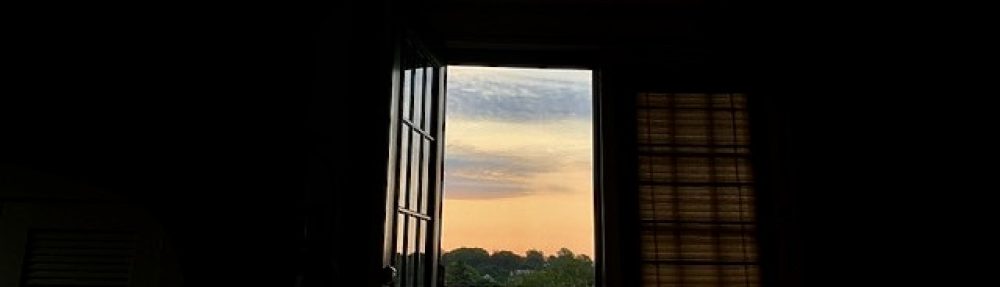
Oh my friend we’re older but no wiser

Having regularly posted pictures online for a few years now, while seeing others do the same, it has often amazed me how readily the subjects in the pictures can travel back and forth through time.  One minute they’re one age and the next they’ve either grown older or (miraculously) younger.

With a blog that begs for a different picture each day (which somehow is meant to tie-in with a line from the featured song), this has certainly been the case with me, and of course it’s part of the fun.  But after posting yesterday’s Paul McCartney song that focused on the topic of…well…”yesterday” and the subsequent process of aging, another Paul McCartney-related song came to mind, as did the niggling question: What or when is a person’s actual Optimal Age?

Never mind the “peak this, or maximum that” of your teenaged years.  On the face of it (and barring any misadventure) it’s hard to argue with the mid-20s, an enchanted time when those cognitive pistons are finally firing in unison, and one is fully able to celebrate the cocksure “Body Electric.” …And yet argue I will.

Because when it comes to judgment, emotional intelligence and if not wisdom at least decades of perspective, and despite a noticeably depreciating mortal coil (and since having the body of a 25 year old isn’t an option) I’ll take the mid-50s anytime. How about you?

By this age one has pretty much proven what one is going to prove (although not totally) and although confidence in the “Body” (electric or otherwise) may not be what it was, confidence in the “Self” more than makes up for it. What’s more and genetics willing, optimism prevails about the future as well.

Research (and personal observation) shows that even waaaay late in life, and fully in the face of the havocs of age, the potential exists for physical, mental and social growth if the proverbial “woof,” in the form of an active appreciation of the wonders-of-this-life, is willfully aligned with a genetic and cultural “warp” that enables one to do so.

Although it fatalistically veers from my point (and I suppose I can’t blame it), “Those Were the Days” was originally written in Russian by poet, Konstantin Podrevskii, with music by Boris Fomin, and later translated by Folk musician, Gene Raskin. It was none other than Paul McCartney (of course) who heard Raskin perform it at a club in London and with Mary Hopkin in mind, duly had his agent purchase the song rights.

The 18 year-old Welsh singer had recently signed with Apple Records and with McCartney serving as producer this, her debut single, topped the UK charts, while reaching Number 2 in the US.  With studio time remaining , it’s interesting to note that the 26 year-old McCartney (whose Optimal Age seems to have been between the ages of 20 and now) also had Hopkins record alternate versions of “Those Were the Days” in Spanish (“Que Tiempo Tan Feliz”), German (“An jenem Tag”), French (“Le temps des fleurs”) and finally in Italian (“Quelli Erano Giorni”).

 LISTEN TO THIS SONG – Wednesday 20 March 

Those Were The Days

 Once upon a time there was a tavern

Where we used to raise a glass or two

Remember how we laughed away the hours

And dreamed of all the great things we would do

 Those were the days my friend

We thought they’d never end

We’d sing and dance forever and a day

We’d live the life we choose

We’d fight and never lose

For we were young and sure to have our way

La la la la…

 Then the busy years went rushing by us

We lost our starry notions on the way

If by chance I’d see you in the tavern

We’d smile at one another and we’d say

 Those were the days my friend

We thought they’d never end

We’d sing and dance forever and a day

We’d live the life we choose

We’d fight and never lose

Those were the days, oh yes those were the days

La la la la…

 Just tonight I stood before the tavern

Nothing seemed the way it used to be

In the glass I saw a strange reflection

Was that lonely woman really me

 Those were the days my friend

We thought they’d never end

We’d sing and dance forever and a day

We’d live the life we choose

We’d fight and never lose

Those were the days, oh yes those were the days

La la la la…

Through the door there came familiar laughter

I saw your face and heard you call my name

Oh my friend we’re older but no wiser

For in our hearts the dreams are still the same

 Those were the days my friend

We thought they’d never end

We’d sing and dance forever and a day

We’d live the life we choose

We’d fight and never lose

Those were the days, oh yes those were the days

La la la la…


There’s a shadow hanging over me

Shortly before his death in 1980, John Lennon noted that the lyrics are “…good, but if you read the whole song, it doesn’t say anything. You don’t know what happened. She left and he wishes it were yesterday, that much you get, but it doesn’t really resolve… I don’t believe in yesterday. Life begins at 40, so they promise, and I believe it. What’s going to come?”

Officially credited to “Lennon/McCartney” the song with “Scrambled Eggs” as its working title, was written solely by Paul McCartney, whose initial concern was that he had subconsciously plagiarized someone else’s work.  When nobody claimed it he began to tinker with it and write lyrics to suit while the Beatles were working on “Help,” which apparently annoyed director Richard Lester, who told McCartney to finish with it or he would have the piano that had been placed on the film’s sound stages removed.

“Blimey,” said George Harrison, “he’s always talking about that song. You’d think he was Beethoven or somebody.”

Accompanied by a string quartet, the succinctly titled “Yesterday” was finally recorded at Abbey Road Studios, four days before his 23rd birthday in 1965.  As McCartney was the only Beatle to appear on the track it was essentially a solo performance.  As a result, the other band members refused to permit its release as a single in the UK.

Their veto didn’t hold sway in the US, however and not only did the resulting single top the Billboard Charts for a full month, it went on to become the most played song on America’s airwaves for a consecutive eight years.  By the time “Yesterday” finally hit the British charts a full ten months after the premier of “Help,” English crooner, Matt Monro had already had a top ten UK hit with his, the first of many, cover versions.  In fact, “Yesterday” remains one of the most covered and recorded songs in history; voted as the Best Song of the 20th Century by a BBC Radio 2 expert listener poll, and the Number One Pop Song Ever by both MTV and Rolling Stone.

Not that it hasn’t received it’ share of criticism.  The freewheelin’ but sometimes inscrutable Bob Dylan claimed not to like it.  “If you go into the Library of Congress, you can find a lot better than that. There are millions of songs like “Michelle” and “Yesterday” written in Tin Pan Alley.”  Dylan is said to have recorded his own version but it was never released.

Recorded by ABC TV (and distributed by ITV) as a promotion for “Help” on the 1 August 1965 broadcast of “Blackpool Night Out,” this was McCartney and the lads’ first performance of  “Yesterday” on British television.

LISTEN TO THIS SONG – Tuesday 19 March

 Yesterday

 Yesterday, all my troubles seemed so far away

Now it looks as though they’re here to stay

Oh, I believe in yesterday

 Suddenly, I’m not half to man I used to be

There’s a shadow hanging over me

Oh, yesterday came suddenly

 Why she had to go I don’t know she wouldn’t say

I said something wrong, now I long for yesterday

Yesterday, love was such an easy game to play

Now I need a place to hide away

Oh, I believe in yesterday


And South America stole our name…let’s drop the big one, there’ll be no one left to blame us…

Even in the face of inflation my research is of the two-penny variety, so it’s a good thing we’re not wasting any paper here.  But it’s interesting to note that Satire, easily the snarkiest form of humor, is widely regarded (along with Irony) as one of the earliest forms of literary expression. As a result, it readily beats out such disciplines as history and anthropology as a means of comprehending an earlier society’s collective values.

But there’s more! Not only is Satire a powerful way to understand contemporary or antediluvian issues, but it has also been known to have clairvoyant qualities. For example, and maybe you even remember this from 1975 when, after Gillette introduced its Twin-blade Trac-II razor, the very first episode of Saturday Night Live satirically featured a mock ad for a triple blade razor (called Triple-Trac). It took a few years, but Gillette’s Mach3 triple-blade cartridge was introduced in 1998.

Then in 2004 “The Onion” satirized the promotion of multiplying blades with its “Fuck Everything, We’re Doing Five Blades” piece…and this time it only took Gillette two years to introduce its Fusion cartridge with…five-blades.

Satire, Yesterday and Today.  Speaking of which, back in ’75 one of the featured artists during the second week’s episode of SNL was (one of our favorites) Randy Newman, who sang “Sail Away” from his 1972 album of the same name. The song as you may recall, takes the form of a “pitch” being made by a slave trader to a poor, unfortunate sole in Africa and the host of that week’s show was Paul Simon, who introduced the performance by saying that he wished he’d written it himself.

Because there’s always room for a little satire, here’s another track from the same album, which Brian Wilson of the Beach Boys actually credited for briefly keeping him from sliding into further depression at the time of its release.  Sound satire will do that for you.

 LISTEN TO THIS SONG – Monday 18 March

Political Science

No one likes us, I don’t know why

We may not be perfect, but heaven knows we try

But all around, even our old friends put us down

Let’s drop the big one and see what happens

We give them money-but are they grateful?

No, they’re spiteful and they’re hateful

They don’t respect us-so let’s surprise them

We’ll drop the big one and pulverize them

 Asia’s crowded and Europe’s too old

Africa is far too hot

And Canada’s too cold

And South America stole our name

Let’s drop the big one

There’ll be no one left to blame us

 We’ll save Australia

Don’t wanna’ hurt no kangaroo

We’ll build an All American amusement park there

They got surfin’ too

Boom goes London and boom Paris

More room for you and more room for me

And every city the whole world round

Will just be another American town

Oh, how peaceful it will be

We’ll set everybody free

You’ll wear a Japanese kimono babe

And there’ll be Italian shoes for me

 They all hate us anyhow

So let’s drop the big one now

Let’s drop the big one now

She’s the Belle of Belfast City

St. George is Patron Saint of England, and St. Andrew is Scotland’s, and St. David is Wales’ Saint, and everyone knows who the Patron Saint of Ireland is.  But who do you suppose is Patron Saint of Northern Ireland?

Here’s a hint, his remains are said to rest in Downpatrick (i.e. “Patrick’s stronghold”) about 20 miles from Belfast.  And here’s another, in addition to the crosses of St. George and St. Andrew, St. Patrick’s is the third cross featured on the Union Jack.  Trick question and Happy St. Patrick’s Day!

Born in Roman Britain and carried into slavery by Irish raiders when he was 16, St. Patrick (as he has been known for way-more than a millennium) worked as an Irish herdsman for six years before escaping back to Britain where he became a person of the cloth. Eventually returning to northern Ireland as an ordained bishop-on-a-mission, he is believed to have founded his first church in a barn near Downpatrick in AD 432 and then to have set up the center of his Christian teachings in the northern Irish township of Armagh.

Dedicated to spreading the gospel to all throughout that Emerald Isle, he gained renown for training pastors, planting churches, healing the sick and “casting out demons.”  But since the modern scholarly mind has little tolerance for ancient miracles, it is frequently speculated that his most famous deed, the banishment of all snakes from Ireland, is actually a metaphor for the expulsion of pagan beliefs.

Although never formally canonized by the Pope, St. Patrick is honored by the Roman Catholic, Anglican, Eastern Orthodox and Lutheran Churches and ‘though he is indelibly associated with the Republic of Ireland he is roundly celebrated in his “home base” of Northern Ireland (with a population that’s 41 percent Catholic and 14 percent Anglican), whose largest city, Belfast is in the thick of its annual four-day St. Patrick’s Festival at this very moment.

Also known as “I’ll Tell me Ma”, this song is most assuredly playing somewhere within those city limits as you read these lines. Although it originated in the streets of Belfast as a children’s skipping song, its lyrics were long ago adapted to suit other locations where it is sung as well. For example, there are versions where the Belle comes from Brisbane or London or Dublin or the “Golden City” of Edinburgh.

It’s performed here by Lick the Tins, an ‘80s Celtic/Folk/Rock band from London, best known for its spirited rendition of “Can’t Help Falling in Love With You”. Although the group broke up soon after this release, rest assured that in Belfast (and everywhere else that celebrates the legendary St. Paddy this weekend), as long as there are those who’ll wear the green, there will be boys who forever and a day… “won’t leave the girls alone.”

 LISTEN TO THIS SONG – St. Patrick’s Day 2013

The Belle of Belfast City

Tell my ma when I go home,

The boys won’t leave the girls alone,

They pulled my hair and stole my comb,

But that’s all right ’till I go home.

She is handsome, she is pretty

She is the belle of Belfast city,

She is courting, one, two, three

Please won’t you tell me who is she?

 Albert Mooney says he loves her,

All the boys are fighting for her,

Knock on the door and they ring the bell

Oh my true love, are you well?

Here she comes, as white as snow,

Rings on her fingers and bells on her toes,

Old Johnny Mary she says she’ll die

If she doesn’t get the boy with the roving eye.

Tell my ma when I go home,

The boys won’t leave the girls alone,

They pulled my hair and stole my comb,

But that’s all right ’till I go home.

 She is handsome, she is pretty

She is the belle of Belfast city,

She is courting, one two three

Please won’t you tell me who is she?

 Let the wind and the rain and the hail blow high

And the snow come tumbling from the sky

She’s as nice as apple pie

She’ll get her own boy, by and by

When she gets a lad of her own,

She won’t tell her ma ’till she comes home,

Let the boys stay as they will,

For it’s Albert Mooney she loves still.

 Tell my ma when I go home,

The boys won’t leave the girls alone,

They pulled my hair and stole my comb,

But that’s all right ’till I go home.

She is handsome, she is pretty

She is the belle of Belfast city,

She is courting, one two three

Please won’t you tell me who is she?

Tell my ma when I go home,

The boys won’t leave the girls alone,

They pulled my hair and stole my comb,

But that’s all right ’till I go home.

She is handsome, she is pretty

She is the belle of Belfast city,

She is courting, one two three

Please won’t you tell me who is she?

Tell my ma when I go home,

The boys won’t leave the girls alone,

They pulled my hair and stole my comb,

But that’s all right ’till I go home.

She is handsome, she is pretty

She is the belle of Belfast city,

She is courting, one two three

Please won’t you tell me who is she


But I miss the land where I was born

As with YOUR family’s history (whether you know it or not) our well-thumbed genealogy (unambiguously entitled, “A New England Family”) contains some rather compelling stories.  Take the tale of mystery and romance that surrounded my great, great grandfather.

Known to all as “the Squire,” and an esteemed citizen of Newburyport, Mass., he had an outsized personality, counting Nathaniel Hawthorne and Franklin Pierce among his personal friends. He was also exceedingly pious, attending services every day (twice on Sundays) at the Old South Presbyterian Church.  But only in recent years can it be comfortably affirmed that the Squire was born out of scandal.

In 1776 a Revolutionary War soldier named Moses Pettingell returned to Newbury (later part of Newburyport) where he joined his brother Eleazer in a “house with brick ends” that they had inherited from their father.  In good weather they fished, in winter they made shoes.  Which remained their practice in 1791, when the two men hired on a housekeeper named Sally Beckett, who had come from Exeter, NH seeking employment.

Four years later, on 6 June 1795, records indicate that Sally and Eleazer were married.  They also indicate that a son was born the following month.  The resulting gossip was only intensified when the child was given the name Moses. Never mind the timing, cryptic speculation would be whispered in family circles for generations regarding the matter of paternity.

Yet what strikes one as remarkable was the subsequent conduct of the three household elders, who came rolling out of Calvinistic 18th Century Massachusetts to share equally in young Moses’ care and upbringing. Although they were common people, unschooled and socially unversed, a course of action was set in place.  No further children were born, the senior Moses remained unmarried and together they worked, saved and methodically prepared young Moses for a life far beyond their own experience.

As indicated by the quality of the writing found in the Squire’s diaries it’s apparent that his schooling was more extensive than the ordinary child, and that Presbyterianism was a major influence from a young age. When he was 15 in 1810, his uncle/parents built a new house that was markedly larger in size, quality and pretension than the humble brick. Conspicuously situated near the mouth of the Merrimack River, their intention was manifestly to furnish the boy with the grandest, most expensive house in the community.

Kind, generous to a fault, and with no discernible bad habits, Moses Pettingell never seemed bothered by the circumstances of his birth, becoming a bastion of his community, while ever-maintaining the instilled belief that he was marked for a special place in life… That he would turn out to be an abysmal businessman and an even worse investor is an account for another time.  Never mind his dim view of Unitarians.

Perhaps I’m wrong in thinking that such a musty old story typifies a uniquely regional sensibility. But for me it remains another reason… (like these provided by Jonathan Richman and The Modern Lovers back in 1976) …why I love New England.

LISTEN TO THIS SONG – Thursday 14 March 

…New England

See, I come from Boston

I’m gonna tell you about how I love New England

It’s my favorite place

I’ve been all around the world, but I love New England best

I might be prejudiced

But it’s true, I love New England best

Well, now…

You know, ladies and gentlemen

I’ve already been to Paris

Already been to Rome

And what did I do but miss my home?

 I have been out west to Californ’

But I miss the land where I was born

I can’t help it

 Dum-de-dum-de-dum-dum-da-dum-day

Oh, New England

Dum-de-dum-de-dum-dum-da-dum-day

Oh, New England

Doddly-doodly-do-do-doo-do-do

Doddly-doodly-do-do-doo-do-do

Doddly-doodly-do-do-doo-do-do

Doddly-doodly-do-do-doo-do-do

I have seen old Israel’s arid plain

It’s magnificent, but so’s Maine

Oh, New England

Dum-de-dum-de-dum-dum-da-dum-day

Oh, New England

Dum-de-dum-de-dum-dum-da-dum-day

Oh, New England

Doddly-doodly-do-do-doo-do-do

Doddly-doodly-do-do-doo-do-do

Doddly-doodly-do-do-doo-do-do

Doddly-doodly-do-do-doo-do-do

 Dum-de-dum-de-dum-dum-da-dum-day

Oh, I love New England…

I know of a fool you see

Before Michael Jackson, before the Amazing Little Stevie Wonder, there was Frankie Lymon.  And just like Jackson and Wonder, he got his professional start at the age of 13.

Born into a poor Harlem family in 1942, Franklin Joseph Lymon, was working as a grocery boy at the age of ten and, with a knowledge of the world well beyond his years, soon began to augment his income by hustling prostitutes.

While still 12 he became enthralled with a Doo-Wop group called the Premiers at a local talent contest and didn’t hesitate to introduce himself as a singer.  After participating in a jam session Lymon was invited to join the group by lead vocalist Herman Santiago, just before they changed their name to the Teenagers and landed a recording audition with a newly created record label.

Santiago and the group’s tenor, Jimmy Merchant, had completed a song for the occasion, which was inspired by some love letters that a friend had received from his girlfriend and shared with them, including the line, “Why do birds sing so gay?”

On the day of the audition Santiago had a sore throat and was unable to sing lead so the precocious Lymon happily stepped in and added his own embellishments. Released as “Why Do Fools Fall in Love” by “Frankie Lymon & the Teenagers,” the song was an instant hit in 1956, reaching Number 6 on the Billboard Charts and Number One in the UK, the first chart topping single there by an American Rock & Roll group. Other hits followed but the limelight was short lived.

Although Santiago had graciously stepped aside as lead, Frankie Lymon soon left the Teenagers to embark upon a solo career that was sadly hampered by a heroin addiction that would take his life at the age of 25.  The Teenagers, who struggled on with other lead singers, finally disbanded in 1961, leaving behind a high-voiced signature sound that at its early best proved to be hugely influential on the wave of girl-groups to follow, while serving as a veritable blueprint for many of Motown’s most successful recordings.

 LISTEN TO THIS SONG – Wednesday 13 March 

Why Do Fools Fall in Love?

Oh wah, oh wah, oh wah

Oh wah, oh wah, oh wah

Why do fools fall in love?

Why do birds sing so gay?

And lovers await the break of day?

Why do they fall in love?

Why does the rain fall from above?

Why do fools fall in love?

Why do they fall in love?

Love is a losing game

And love can be a shame

I know of a fool you see, for that fool is me

Tell me why, why, why, tell me why

Why do birds sing so gay?

And lovers await the break of day?

Why do they fall in love?

 Why does the rain fall from above?

Why do fools fall in love?

Why do they fall in love?

 Why does my heart skip a crazy beat?

Before I know it will reach defeat

Tell me why, why, why

Why do fools fall in love?

Many a man would face his gun and many a man would fall

I think I understand why John Ford disliked the song and don’t believe it was a generational thing between the 68-year-old film director and Gene Pitney, the 22-year-old teen idol who had been hired to sing it.  I say it was a case of a proposed theme song that cut across the deep aesthetic grain of a rare artist who remains the only person ever to win four Best Director Oscars.

Although his major awards were won for adaptations of iconic 20th Century novels, he is best remembered for his acute feel for the 19th Century American frontier. In addition to customarily breathtaking cinematography and a consistently clear visual style, Ford was highly adept at incorporating a film’s musical score into the story. So much so that it sometimes took on greater importance than dialogue.

So despite the many merits of a pop song that had been commissioned by the studio for what would prove to be Ford’s last great film, in 1962, it didn’t blend well with the director’s elegaic vision.  And John Ford wasn’t one who liked to be told what to do, as one studio executive famously learned when he complained that one of Ford’s films was falling behind schedule.  The accomplished director quietly held up the script and tore out an entire scene saying, “There, now we’re all caught up!”  True to his word the scene was never filmed.

Nor was the song, “The Man Who Shot Liberty Valance,” written by a couple of Brill Building collaborators named Burt Bacharach & Hal David, used in the now classic film, “The Man Who Shot Liberty Valance.” Instead, Ford opted for the “Ann Rutledge Theme” from his 1938 film,” Young Mr. Lincoln,” starring Henry Fonda.

Not that it was a tragic decision. Evocatively filmed in Black & White and starring John Wayne and Jimmy Stewart, the movie was a huge success and, peaking at Number 4 on the Billboard Charts, so was the song.  Be sure to listen for those two shots after “…shot Liberty Valance,” if you’re in any doubt about the bravest of them all.

 LISTEN TO THIS SONG – Tuesday 12 March 

The Man Who Shot Liberty Valance

When Liberty Valance rode to town the womenfolk would hide, they’d hide

When Liberty Valance walked around the men would step aside

‘Cause the point of a gun was the only law that Liberty understood

When it came to shootin’ straight and fast, he was mighty good

 From out of the East a stranger came, a law book in his hand, a man

The kind of a man the West would need to tame a troubled land

‘Cause the point of a gun was the only law that Liberty understood

When it came to shootin’ straight and fast, he was mighty good

Many a man would face his gun and many a man would fall

The man who shot Liberty Valance, he shot Liberty Valance

He was the bravest of them all

The love of a girl can make a man stay on when he should go, stay on

Just tryin’ to build a peaceful life where love is free to grow

But the point of a gun was the only law that Liberty understood

When the final showdown came at last, a law book was no good

Alone and afraid she prayed that he’d return that fateful night, awww that night

When nothin’ she said could keep her man from goin’ out to fight

From the moment a girl gets to be full-grown the very first thing she learns

When two men go out to face each other, only one returrrrns

 Everyone heard two shots ring out, a shot made Liberty fall

The man who shot Liberty Valance, he shot Liberty Valance

He was the bravest of them all

The man who shot Liberty Valance, he shot Liberty Valance

He was the bravest of them all

Get up, get up, get out of bed

I’ve always preferred Nantucket myself, but soon after we were married Linda and I took the short ferry to Martha’s Vineyard for a delightful stay with her elderly aunt.  A fascinating woman, Auntie Mary and her husband, Uncle Clement, had purchased the oldest house in what was then known as Gay Head back in the 1930s.  Although it was rather rustic compared to the homes that have sprouted since, it commanded an incredible view of the western end of the island, jutting into Vineyard Sound.

Officially known as Aquinnah since 1997, the area is a cultural center of the Wampanoags, who represent a third of the population there. Many of them were Auntie Mary’s friends and with no children of her own she would come to leave the better part of her property to the Wampanoag Tribe when she died.

Despite incurring one of the worst sunburns of my life (as red as the lobsters we later steamed) it was meeting some of the local characters that I now remember best during that visit, including an aging historian who lived across Lighthouse Road and wrote books about ship wrecks and Indian legends.  I also remember having a gander at some of the surrounding properties, particularly those owned by the Taylors.  Down to the right there was James’ place, then Kate’s house, and although I’m not sure about Alex, just over here was younger brother Hugh’s establishment, The Outermost Inn.

Personally I’ve never been comfortable around celebrities, particularly when I’m a fan.  Really, what does one have to say?  And I found it interesting that the only one of those siblings who didn’t seem to have a residence within view was the one I was most familiar with, Livingston, whom I’d seen in concert on countless occasions. His place was farther down the road.

Born in Boston (in 1950) and raised in Chapel Hill where his father was Dean of the UNC Medical School, like his brother and sister, he endured debilitating depression as a teen, receiving his diploma from Arlington High School, which had a program especially affiliated with McLean Hospital.  As was the case with his siblings, learning to play the guitar was apparently therapeutic.

When James appeared on the cover of Time in 1971, mention was made of a possible Taylor musical dynasty and although that never came to pass it meant that Livingston was far more accessible and invariably that his concerts were a lot more fun. Anyone of a certain age who lived in Boston in the ‘70s may well remember him as a coffeehouse and college campus regular, sometimes performing with a band, sometimes solo, sometimes with his sister, Kate.

I contend that although he doesn’t quite have his brother’s phenomenal writing chops, Livingston is a better performer, whose professorship at the Berklee College of Music seems to suit him to a tee.  Still recording and still touring, we even see him perform here in the wilds of Concord on occasion.  And as long as there isn’t any uncomfortable meet-the-celebrity chitchat afterwards, they’re shows that I’m always happy to attend.

Serving as the first track on Taylor’s second album, “Liv,” released in 1971, this is a perfect song for a Monday morning.

LISTEN TO THIS SONG – Monday 11 March 

Get Up, Get Out Of Bed

 There’s a festival today

Come and see it’s all so fine

People who are not my kind are here

There’s a festival today

The world is changing fresh and new

It’s mostly green with bits of blue

 But it’s all here for you

And here’s all you have to do

 Get up, get up, get out of bed

Let the sunshine fill your head

Listen to what your friends have said

Get up, get out of bed

 Morning with a quick yawn

I’ll be gone

I’ll be hurrying on my way

I hear there’s a bad cat

On your back

 And you’d best stay in today

And tomorrow I’m here to say

 Get up, get up, get out of bed

Let the sunshine fill your head

Listen to what your friends have said

Get up, get out of bed

 Can you see me clearly?

Lover, I do not know

Can you hear me nearly?

Oh, and I do think so

Then you ain’t got far to go

 Get up, get up, get out of bed

Let the sunshine fill your head

Listen to what your friends have said

Get up, get out of bed

We skipped a light fandango; turned cartwheels ‘cross the floor

Recognized as the most played record by British broadcasting of the past 70 years, more than 1,000 cover versions have been recorded by other artists.  And as one might imagine it all began at a party when non-musician lyricist, Keith Reid overheard someone say to a rather inebriated woman, “you’ve turned a whiter shade of pale.”

When it’s not alluding to Chaucer’s story of courtly love in “The Miller’s Tale” the song blends Reid’s intimations of drunken seduction with vocalist and keyboardist, Gary Brooker’s Bach-inspired melody.  Organist Matthew Fisher also received belated credit and it’s interesting to note that “A Whiter Shade of Pale” doesn’t actually crib from Bach’s “Air on the G String” as much as it does Percy Sledge’s “When a Man Loves a Woman”.

Formed in Southend-on-Sea in 1967, Procol Harum (not Harem) got its name from a friend’s Burmese cat, which itself got the name from its owner’s poor Latin translation of “beyond these things.”  Perhaps the first group to incorporate a lyricist as a full member of the band (King Crimson later did the same), “Whiter Shade of Pale” was Procol Harum’s debut release, reaching Number One in the UK and Number Five in the US during that groovy Summer of Love.

 LISTEN TO THIS SONG – Sunday 10 March 

A Whiter Shade of Pale

 We skipped a light fandango

Turned cartwheels ‘cross the floor

I was feeling kind of seasick

But the crowd called out for more

The room was humming harder

As the ceiling flew away

When we called out for another drink

The waiter brought a tray

And so it was that later

As the miller told his tale

That her face at first just ghostly

Turned a whiter shade of pale

 She said there is no reason

And the truth is plain to see

That I wandered through my playing cards

And would not let her be

One of sixteen vestal virgins

Who were leaving for the coast

And although my eyes were open

They might just as well have been closed

And so it was later

As the miller told his tale

That her face at first just ghostly

Turned a whiter shade of pale

Some content on this page was disabled on September 30, 2016 as a result of a DMCA takedown notice from PRS for Music. You can learn more about the DMCA here:

https://wordpress.com/support/copyright-and-the-dmca/

Put us back on the train 


They all knew one another as students at Kent State University and were decidedly affected by the events of that sad, sad day in 1970.  But while Mark Mothersbaugh and Gerald Casale  took a snarky, industrial route to form Devo (Casale was standing mere yards away from two friends when they were killed), Chrissie Hynde saved her shekels and moved to England.

Born in Akron in 1951, Hynde, who had studied art in college tried writing for a while but eventually found herself working in Malcolm McLaren’s London clothing store.  It was there that she met teenaged Sid Vicious and tried to convince him to marry her so that she could claim permanent residency.

No luck with that and after time spent in Paris and Cleveland (such a juxtaposition) Hynde managed to make her way back to London where she played for early versions of The Clash and The Damned before finally forming a group of her own in 1978.  Of course the group needed a name, especially after a series of song demos began to be passed around, and in honor of The Platters’ “The Great Pretender” Hynde dubbed it, “Pretenders.”

First released as a single in 1982, when it reached Number 17 on the UK charts and Number 5 on the American Billboard Charts, this song was originally meant to be about Hynde’s ex, Ray Davies of the Kinks, with whom she had a daughter.  But before it could be recorded the focus changed after the group’s guitarist (James Honeyman-Scott) died of a drug overdose.

Purposely reflecting Sam Cooke’s 1960 hit “Chain Gang” with its memorable chain-gang chant, “Back on the Chain Gang” would eventually find its way onto the reorganized group’s third album, “Learning to Crawl” in 1984.

 LISTEN TO THIS SONG – Friday 8 March

Back on the Chain Gang

 I found a picture of you,

Oh oh oh oh

What hijacked my world that night?

To a place in the past

We’ve been cast out of?

Oh oh oh oh

Now we’re back in the fight

We’re back on the train

Oh, back on the chain gang

 A circumstance beyond our control,

Oh oh oh oh

The phone, the TV and the news of the world

Got in the house like a pigeon from hell,

Oh oh oh oh

Threw sand in our eyes and descended like flies

Put us back on the train

Oh, back on the chain gang

 The powers that be

That force us to live like we do

Bring me to my knees

When I see what they’ve done to you

But I’ll die as I stand here today

Knowing that deep in my heart

They’ll fall to ruin one day

For making us part

 I found a picture of you,

Oh oh oh oh

Those were the happiest days of my life

Like a break in the battle was your part,

Oh oh oh oh 
in the wretched life of a lonely heart

Now we’re back on the train

Oh, back on the chain gang