…knock a little louder baby!

After yesterday’s R.E.M. feature, mention was made of “the other band from Athens, GA” and that’s all the motivation we need to haul out one of the all-time great summer Friday night dance songs, inspired in part by an actual shack on Jefferson Road, not all that far from the University of Georgia.

Formed one October night in 1976 when brother and sister, Cindy and Ricky Wilson, and some of their musician friends shared a few specialty ‘Flaming Volcano’ cocktails at a local Chinese Restaurant, which led to an impromptu jam session, the resulting ensemble began to practice in earnest, and played their first real gig at a Valentine’s Day party the following year.

Rounded out by Kate Pierson, Keith Strickland and (cowbell player and vocalist) Fred Schneider, the band went for a quirky, New Wave combination of surf and dance music that was characterized by Ricky Wilson’s oddball guitar tunings and Schneider’s  “sprechgesang” vocals (featuring rapid, loose, speech-like articulation).  Considering their predilection for “thrift-shop chic,” they decided to name themselves after Southern slang for a beehive hairdo, which to some resembles the nose cone of a B-52.

Quickly gaining a local following, the B-52s soon began to take road trips to New York for weekend gigs at such venues as CBGBs and, with their outrageous performances and “stream of consciousness” songs, attracted a following there as well. “We always appealed to people outside the mainstream,” said Pierson, “and I think more people feel outside the mainstream these days.”

The biggest crowd-pleaser in those days became their first (independently released) single in 1978, the garage party classic “Rock Lobster”.  A record deal soon followed, and their debut album, The B-52’s was released to the world in ’79 with an extended version of their hit song.  Intriguingly, that track was cited as a catalyst for John Lennon (whose music career was on hiatus while he helped to raise his son, Sean) to return to the studio.  “It sounds just like Ono’s music, so I said to me-self, it’s time to get out the old axe and wake the wife up!” he said during an interview after the release of (his final album) “Double Fantasy”.

Like most of the group’s early songs, “Rock Lobster” was conceived at the rustic (i.e. no appliance’s, no running water) cabin on Jefferson Road that Kate Pierson rented for $15 a month between 1973 and 1979.   Capped by a rusting tin roof, the shack would serve as an inspiration for today’s selection.

Featured on the group’s fifth studio album, Cosmic Thing (a comeback album of sorts in 1989 after the AIDS related death of Ricky Wilson) “Love Shack” was also inspired by any number of “down-home, throw-down, disco juke joints that you would find in the rural South,” as well as a 1969 Temptations song called “Psychedelic Shack,” containing the lyric, “Psychedelic Shack, that’s where it’s at.”

The B-52s first million copy seller and easily their biggest hit, “Love Shack” was also their first single to reach the Billboard Top 40 charts, peaking at Number Three and reaching the Number Two singles spot in the UK.  Years later it would become the first publicly ripped and played song using iTunes software.

And what about “Tin roof, rusted!” which is prominantly wailed out by lead singer, Cindy Wilson?  According to the Urban Dictionary it means that one is pregnant, but Fred Schneider insists it means nothing at all and that it was just something she yelled when they came to a break during recording.  Everyone liked it so they stuck with it.

As for Pierson’s cabin, it burned down in 2004 long after she’d moved on.  Still, the song remains the same on dance floors throughout the world….

LISTEN TO TODAY’S SELECTION – Friday 13 July

Love Shack

 If you see a faded sign by the side of the road that says

15 miles to the… Love Shack! Love Shack yeah

I’m headin’ down the Atlanta highway,

Lookin’ for the love getaway

Heading for the love getaway, love getaway,

I got me a car, it’s as big as a whale

And we’re headin’ on down

To the Love Shack

I got me a Chrysler, it seats about 20

So hurry up and bring your jukebox money

 The Love Shack is a little old place

Where we can get together

Love Shack baby, Love Shack bay-bee.

Love baby, that’s where it’s at

Ooo love baby, that’s where it’s at

Sign says…stay away fools,

‘Cause love rules at the Lo-o-ove Shack!

Well it’s set way back in the middle of a field,

Just a funky old shack and I gotta’ get back

Glitter on the mattress

Glitter on the highway

Glitter on the front porch

Glitter on the hallway

The Love Shack is a little old place

Where we can get together

Love Shack bay-bee! Love Shack baby!

Love Shack, that’s where it’s at!

Huggin’ and a kissin’, dancin’ and a lovin’,

Wearin’ next to nothing

Cause it’s hot as an oven

The whole shack shimmies, ya the the while shack shimmies!

The whole shack shimmies when everybody’s

Movin’ around and around and around and around!

Everybody’s movin’, everybody’s groovin’ baby!

Folks linin’ up outside just to get down

Everybody’s movin’, everybody’s groovin’ baby

Funky little shack! Funk-y little shack!

Hop in my Chrysler,

it’s as big as a whale

and it’s about to set sail!

I got me a car, it seats about twenty

So c’mon and bring your jukebox money.

The Love Shack is a little old place

Where we can get together

Love Shack baby! Love Shack bay-bee!

(Love Shack…Love Shack…)

Love Shack, that’s where it’s at!

Bang bang bang on the door baby!

Knock a little louder baby!

Bang bang bang on the door baby!

I can’t hear you

Bang bang on the door baby

Bang bang on the door

Bang bang on the door baby

Bang bang

You’re what?… Tin roof, rusted!

 Love Shack, baby Love Shack!

Love Shack, baby Love Shack!

Love baby, that’s where it’s at

Love Shack, baby Love Shack!

Love baby, that’s where it’s at

Huggin’ and a kissin’,

Dancin’ and a lovin’ at the love shack


…nightswimming deserves a quiet night

Back in 1980 one of Michael Stipe’s favorite haunts was the Wuxtry Record Shop. An art major at the University of Georgia (UGA), Stipe especially liked such “protopunk” artists as The Velvet Underground, Television and Patti Smith, which even in a college town like Athens (at the time) was unusual enough for the counter clerk to take notice.  A fellow UGA student named Peter Buck, the clerk happened to share Stipe’s distinctive taste in music and the two became friends.

As both were musicians they decided to give song writing a go, and then after meeting fellow student/musicians Mike Mills and Bill Berry, who also enjoyed their brand of music, they decided to form a band.  “There was never any grand plan behind any of it,” said Stipe about the four musical collaborators, who played their first show at a friend’s birthday party held in a converted church.  After considering such names for the band as Twisted Kites, Cans of Piss, and Negro Wives, Stipe randomly selected something from the dictionary that appealed to everyone: R.E.M.

With a few more gigs under their belt, the group established a local following and each dropped out of school to focus on their music, leading to the release of their debut single, “Radio Free Europe”  (with an independent record label) in 1981.  The song swiftly became a college radio success and after a notable concert opening for The Police, R.E.M. landed a major record deal.  Their 1983 debut album, “Murmur” would go on to win the Rolling Stone Critics Poll Album of the Year over Michael Jackson’s “Thriller” and the former UGA boys were on their way.

Featured as a track on “Automatic for the People”, R.E.M.’s eighth album, in 1992, today’s seasonal selection harkens back to those early years.  Mainly written by Mike Mills (most of the group’s songs were collaborative efforts with credit shared by all), it was “based on true events.”  According to Mills after the Athens, Georgia clubs had closed the members of the band often went skinny-dipping to cool down, and were regularly joined by “any number of these same 50 people. It was a very tight circle of friends.”

Recorded at Criteria Studios in Miami, with Stipe as vocalist, the recording also features former Led Zeppelin bassist John Paul Jones and oboist Deborah Workman, with Mills (elatedly) playing the same piano used by Derek and the Dominos on that classic recording of “Layla”.

LISTEN TO TODAY’S SELECTION – Thursday 12 July  

Nightswimming

 Nightswimming deserves a quiet night

The photograph on the dashboard, taken years ago

Turned around backwards so the windshield shows

Every streetlight reveals the picture in reverse

Still, it’s so much clearer

I forgot my shirt at the water’s edge

The moon is low tonight

 Nightswimming deserves a quiet night

I’m not sure all these people understand

It’s not like years ago

The fear of getting caught

Of recklessness and water

They cannot see me naked

These things, they go away

Replaced by everyday

 Nightswimming, remembering that night

September’s coming soon

I’m pining for the moon

And what if there were two

Side by side in orbit

Around the fairest sun?

That bright, tight forever drum

Could not describe nightswimming

 You, I thought I knew you

You I cannot judge

You, I thought you knew me

This one laughing quietly underneath my breath

Nightswimming

 The photograph reflects

Every streetlight a reminder

Nightswimming deserves a quiet night, deserves a quiet night

…Summertime will be a love-in there

Forty five years have passed since that Summer of Love, when nearly 100,000 people cascaded into San Francisco’s (then and now) bohemian Haight-Ashbury neighborhood. 1967 was very much a year for “people in motion” but “the strange vibration” had its genesis that January, with a counterculture “gathering of tribes for a Human Be-In” at neighboring Golden Gate Park. Perhaps you were there too.

Organized by Beat Generation icon, Michael Bowen, the “Be-In” featured prominent counterculture speakers along with some of San Francisco’s finest rock bands and was specifically devised to be imitated because, in Bowen’s words, “A new concept of celebrations beneath the human underground must emerge, become conscious, and be shared, so a revolution can be formed with a renaissance of compassion, awareness, and love, and the revelation of unity for all mankind.”

More than 30,000 people showed up and the event succeeded beyond anyone’s wildest dreams.  Certainly John Phillips of The Mamas & the Papas was impressed and, with the “Be-In” spirit in mind, he and some associates conceived, planned and (throughout the spring) organized the three-day Monterey International Pop Music Festival.

Held that June at the Monterey Fair Grounds (a couple of hours down Highway 1 from San Francisco) where popular Jazz and Folk festivals had long been enjoyed, Phillips and his fellow promoters saw “Monterey Pop” as a way to uphold rock music as an art form.  Mixing musical genres and placing established groups next to groundbreaking acts, it has since become the template for popular music festivals right to this day.

By the festival’s Sunday-at-midnight culmination, nearly 90,000 people had gathered in and (especially) around the fairgrounds, having grooved to performances by the likes of: Simon & Garfunkel, Country Joe and the Fish, The Grateful Dead, The Byrds, Buffalo Springfield, Jefferson Airplane, Steve Miller Band, Moby Grape, Canned Heat, Eric Burden & the Animals, Johnny Rivers, The Butterfield Blues Band, The Association….and the relatively unknown Laura Nyro.

But Monterey Pop is best remembered for serving as the first major American venue for Ravi Shankar, Janis Joplin, Otis Redding (with Booker T. & the M.G.s), The Who and The Jimi Hendrix Experience.  As a matter of fact on that final evening Pete Townshend won a coin toss with Jimi Hendrix and The Who appeared first, as each refused to go on after the other, mainly because both acts featured instrument-demolishing conclusions to their sets – Townshend smashing his guitar amid smoke bombs while Keith Moon kicked over his drum kit; Hendrix kneeling before his wailing guitar while playing “Wild Thing”, then dousing it with lighter fluid and setting it aflame before smashing it and throwing the still keening instrument into the audience.

While John Phillips and his (much more mellow) Mamas & the Papas, followed Hendrix, Scott McKenzie helped to close the show with today’s selection. Written that spring by Phillips, specifically for his childhood friend and former band mate, McKenzie (born Phillip Blondheim in 1939) the song was initially meant to be a means of promoting the Monterey Pop Festival.

Instead, “San Francisco (Be Sure to Wear Flowers in Your Hair)”  instantly became a global hit upon its May release, reaching Number 4 on the U.S. Billboard Charts while topping the charts in the UK and throughout much of Europe.  It even crossed the Iron Curtain and served as an anthem during the following year’s Prague Spring uprising.

And when combined with the Media’s sudden infatuation with all things counterculture it was this song in particular that fueled that massive summer convergence all those years ago. While a hippie revolution was in the works in major cities throughout North America and Europe, Haight Ashbury remained its epicenter and by mid-July a full-blown social experiment was underway, with its unbridled creative expression, guileless communal living, mind-bending psychedelia….and (“people in motion”) rampant free love.

 LISTEN TO TODAY’S SELECTION – Wednesday 11 July

San Francisco

If you’re going to San Francisco

Be sure to wear some flowers in your hair

If you’re going to San Francisco

You’re gonna meet some gentle people there

For those who come to San Francisco

Summertime will be a love-in there

In the streets of San Francisco

Gentle people with flowers in their hair

All across the nation such a strange vibration

People in motion

There’s a whole generation with a new explanation

People in motion, people in motion

 For those who come to San Francisco

Be sure to wear some flowers in your hair

If you come to San Francisco

Summertime will be a love-in there

If you come to San Francisco

Summertime will be a love-in there

…beach baby, beach baby, there on the sand


When last we observed singer Tony Burrows (Wednesday 6 June) it was noted that he is the only person ever to front three different groups on the same episode of BBC TV’s Top of the Pops; most memorably singing “Love Grows Where My Rosemary Goes” with Edison Lighthouse.  If you read that post perhaps you’ll recall that Burrows (who has sung more hit singles with different groups than any other recording artist in history) had one of his earliest hits with “Let’s Go to San Francisco” while with the Flowerpot Men, which was co-written and backed by one John Carter.

Born in the West Midland city of Birmingham in 1942, John Nicholas Shakespeare (stage name Carter) had his hand in as many musical pies as Burrows throughout the ‘60s and early ‘70s – either as a song writer, with credits that include “Can’t You Hear My Heartbeat” for Herman’s Hermits, “Knock, Knock Who’s There” which was a Eurovision Song finalist for Mary Hopkin, and “Is it True?” for Brenda Lee – or as a vocalist backing The Who on “I Can’t Explain”, Tom Jones on “It’s Not Unusual”, Jeff Beck on “Hi Ho Silver Lining”, Sandie Shaw on “Always Something There to Remind Me” and singing lead for (remember this one?) The New Vaudeville Band’s “Winchester Cathedral”.

By 1974 the boon years were cooling for Carter, but inspired by the Beach Boys’ Brian Wilson (and by the horn arrangements in Jean Sibelius’ Fifth Symphony), he and his wife, Gillian wrote today’s selection far from any beach (unless you count the banks of the Pen Pond in Richmond Park), while at home in East Sheen, London SW14. Envisioning a complex production with layered vocals, Carter then enlisted his old associate, Tony Burrows among others, to help in recording the song under the name of The First Class.

Reaching the Number 13 spot on the UK Charts, “Beach Baby” especially resonated in the U.S. where it peaked at Number 4 on the Billboard Charts, although it would prove to be the last big hit both for Burrows, who still continues with his successful session career and Carter, who has moved on the the lucrative advertising jingle market while managing his extensive back catalog.

 LISTEN TO TODAY’S SELECTION – Tuesday 10 July

Beach Baby

 Do you remember back in old L.A. (Oh, oh, oh)

When everybody drove a Chevrolet (Oh, oh, oh)

Whatever happened to the boy next door

The sun-tanned, crew cut, All-American male?

 Remember dancing at the high school hop?

The dress I ruined with the soda pop?

I didn’t recognize the girl next door

With beat up sneakers and a pony tail

 Beach baby, beach baby, give me your hand

Give me something that I can remember

Just like before we can walk by the shore in the moonlight

Beach baby, beach baby, there on the sand

From July to the end of September

Surfin’ was fun we’d be out in the sun every day

 Ooooh, I never thought that it could end

Ooooh, and I was everybody’s friend

Long hot days

Blue sea haze

Jukebox plays

But now it’s fading away

We couldn’t wait for graduation day (Oh, oh, oh)

We took the car and drove to San Jose (Oh, oh, oh)

That’s where you told me that you’d wear my ring

I guess you don’t remember anything

Beach baby, beach baby, give me your hand

Give me something that I can remember

Just like before we can walk by the shore in the moonlight

Beach baby, beach baby, there on the sand

From July til the end of September

Surfin’ was fun we’d be out in the sun every day

 Ahhh, ahhh, ahhh,
Ahhh, ahhh, ahhh

Beach baby, beach baby, give me your hand

Give me something that I can remember

Just like before we can walk by the shore in the moonlight

Beach baby, beach baby, there on the sand

From July til the end of September

Surfin’ was fun we’d be out in the sun every day

…laughing all our cares away

Ringo was wrong.  Back in the early-to-mid ‘60s BBC Television ran a popular Saturday night program called Juke Box Jury (based on Jukebox Jury in the States), where celebrity guests served as judges and considered the hit potential of newly released records. They’d then hit a buzzer if they forecasted a “hit” or a hooter if they foresaw a “miss”.

Generally comprising two male and two female judges, the panel changed on a weekly basis and through the years consisted of such diverse figures as: Alfred Hitchcock, Spike Milligan, Johnny Mathis, David McCallum, Cilla Black, Roy Orbison, Petula Clark, Jayne Mansfield, Cliff Richard, Paul Anka, Tony Orlando, Sean Connery, Albert Finney, Peter Sellers, Henry Mancini, Zsa Zsa Gabor, Marianne Faithfull, Liza Minnelli, Twiggy, Lulu and Long John Baldry.

Popular with both younger and older viewers the program is said to have confirmed “adult (anti-pop) and youthful prejudices at the same time.” Certainly this was so when, in 1963, the four Beatles appeared together, and in ’64 when the five Rolling Stones (the only time there were more than four judges) did the same. As Keith Richards later admitted, “We just trashed every record they played.”

Later on, the Beatles also appeared separately on the program, as did Brian Epstein, and in 1964 Ringo Starr “hooted” today’s selection…which would soon peak at Number 7 on the U.S. Billboard Charts.

Discovered in a London club, David Stuart Chadwick (aka Chad Stuart) and Michael Thomas Jeremy Clyde (Jeremy Clyde), both born in 1941, formed the folk rock duo, Chad & Jeremy. After having an international hit with the single, “Yesterday’s Gone” in 1963 (thanks in large part to the “British Invasion” momentum) the duo recorded an album of the same name, which included “A Summer Song”.

Released as a single in July of 1964 (precisely 48 years ago) the UK version, which failed to chart (so maybe Ringo wasn’t all wrong after all) opened with Chad & Jeremy trading vocals, while the concurrent American version (which remained on the Billboard charts for six weeks) featured them singing in unison throughout.

“You’d never hear something that sweet in the British charts,” opined Chad Stuart, “for some reason in America it worked. I don’t honestly know why.”

 LISTEN TO TODAY’S SELECTION – Monday 9 July

A Summer Song

 Trees swayin’ in the summer breeze

Showin’ off their silver leaves

As we walk by

 Soft kisses on a summer’s day

Laughing all our cares away

Just you and I

Sweet sleepy warmth of summer nights

Gazing at the distant lights

In the starry sky

They say that all good things must end someday

Autumn leaves must fall

But don’t you know that it hurts me so

To say goodbye to you

Wish you didn’t have to go

No, no, no, no

 And when the rain

Beats against my windowpane

I’ll think of summer days again

And dream of you

 They say that all good things must end someday

Autumn leaves must fall

But don’t you know that it hurts me so

To say goodbye to you

Wish you didn’t have to go

No, no, no, no

And when the rain

Beats against my windowpane

I’ll think of summer days again

And dream of you

And dream of you

…for the earth forever turning

Born in 1939 in Altoona, PA, saxophonist Paul Winter formed the Paul Winter Sextet when he was a student at Northwestern University. The group went on to win the Intercollegiate Jazz Festival contest and was quickly signed by Columbia Records. The following year (1962) they played 160 concerts in 23 Latin American countries (serving as cultural ambassadors for the State Department) and became the first jazz band to perform at the White House.

A pioneer of the “World Music” (as in “someone else’s local music”) and “Space Music” (as in contemplative spaciousness) genres, and a recipient of the Courage of Conscience Award for “creating music that celebrates the sacredness of life,” by the late ‘60s Winter had changed the name of his group to the Paul Winter Consort.

Today’s selection comes from their 1982 album “Missa Gaia” (“Missa” is Latin for “Mass”, “Gaia” is Greek for “Mother Nature”), also referred to as “Earth Mass” composed after the Paul Winter Consort became artists in residence at New York’s Cathedral of St. John the Divine.

Written by Kim Oler (and featured in a slightly different arrangement in the pleasingly venerated UU Hymnbook as “For the Earth Forever Turning”), the text for “The Blue Green Hills of Earth” was suggested to Oler by Winter who was inspired by Robert Heinlein’s 1947 short story, “The Green Hills of Earth” which in turn was inspired by C. L. Moore’s 1933 short story “Shambleau”.

In Heinlein’s futuristic story an aging spaceship engineer and poet (who has been blinded by radiation poisoning) crisscrosses the solar system, writing songs along the way.  Now near the end of his life he hitches a ride on a shuttle back to Earth so that he can be buried where he was born. After entering an irradiated area to save the ship from destruction he asks that the crew record his final song and dies moments after reciting the final verse…

We pray for one last landing/ On the globe that gave us birth/ Let us rest our eyes on the fleecy skies/ And the cool, green hills of Earth.

LISTEN TO TODAY’S SELECTION – Sunday 8 July

The Blue, Green Hills of Earth

 For the earth, forever turning

For the skies, for every sea

To our Lord we sing returning

Home to our blue green hills of earth

For the earth, forever turning

For the skies, for every sea

To our God we sing returning

Home to our blue green hills of earth

 For the mountains, hills and pastures

In their silent majesty

For all life, for all of nature

Sing we our joyful praise to thee

For the sun, for rain and thunder

For the land that makes us free

For the stars, for all the heavens

Sing we our joyful praise to thee

For the earth forever turning

For the skies, for every sea

To our Lord we sing returning

Home to our blue green hills of earth

…and once when you weren’t looking, I did a cannonball

Here we are again, my friends, that sultry season when we in the Northern Hemisphere venture out of doors in pursuit of our gardens and barbeques and picnic baskets. The baseball diamonds (and yes, cricket pitches) are much scuffled by seasonal leagues while area beaches and pools emerge as the stuff of song.

Although it means returning yet again to Mr. Wainwright III (who as a young man sold his guitar for yoga lessons) one would be hard pressed to put forth a better summertime melody than this, featured on his fourth album in 1973, “Attempted Mustache”.

Recorded in Nashville, that’s his then-wife, Kate McGarrigle on banjo.  She and her sister, Anna would cover “The Swimming Song” on their debut album, just a few years later.

“AAAAAA-eeeeee!!!!”

LISTEN TO TODAY’S SELECTION – Saturday 7 July

The Swimming Song

This summer I went swimming,

This summer I might have drowned.

But I held my breath and I kicked my feet

And I moved my arms around,

I moved my arms around.

 This summer I swam in the ocean,

And I swam in a swimming pool.

Salt my wounds, chlorine my eyes,

I’m a self-destructive fool,

A self-destructive fool.

This summer I did the backstroke

And you know that’s not all

I did the breaststroke and the butterfly

And the old Australian crawl,

The old Australian crawl.

 This summer I swam in a public place

And a reservoir, to boot,

At the latter I was informal,

At the former I wore my suit,

I wore my swimming suit.

This summer I did swan dives

And jackknifes for you all

And once when you weren’t looking

I did a cannonball,

I did a cannonball.

 This summer I went swimming,

This summer I might have drowned

But I held my breath and I kicked my feet

And I moved my arms around,

I moved my arms around.

…Perennial with the Earth, with Freedom, Law and Love

The volume of twelve unnamed, free-verse poems was first published on the 4th of July, its cover page featuring only a title and the place and year of publication: Brooklyn, New York 1855. The poet/author was unnamed but on the opposite page was his engraved depiction, casually attired in work clothes and a jaunty hat; this in an era when the word “poet” conjured up visions of one of the Fireside Poets, as in staid John Greenleaf Whittier or distinguished Henry Wadsworth Longfellow, with his leonine mane and finely tailored apparel.

Even the title itself was rather insouciant and actually a pun, “Grass” being a publishing term for works of minor value and “leaves” being another name for the pages on which a published piece was printed. Early advertisements appealed to “lovers of literary curiosities,” and although 800 copies were printed, only 200 were bound in its trademark green cloth cover.

Lauding both the human mind and form (to the offense of those not accustomed to such earthiness) with an emphasis on the American spirit, at 95 pages the first edition of “Leaves of Grass” was small enough to be carried in a pocket so that, in the words of that unnamed author, it would “induce people to take me along with them and read me in the open air: I am nearly always successful with the reader in the open air.”

Sales were predictably rare, but the man in the etching, Walt Whitman, had been on a mission since the day he’d read Ralph Waldo Emerson’s essay, “The Poet” in which the Concord sage proclaimed the need for a uniquely “American” form of poetry, written by a uniquely American poet, a poet of the people. “I was simmering, simmering, simmering,” Whitman later said, “Emerson brought me to a boil.”

Upon receiving a copy of the unusual new book, Emerson responded in writing, declaring it to be “the most extraordinary piece of wit and wisdom America has yet contributed…I am very happy in reading it, as great power makes us happy.”

After that initial publication, Whitman would continually revise his masterwork (with nine editions through the years) shifting, adding and sometimes removing, for the rest of his life. The hugely expanded 384 page second edition followed only a year later, leading off with a phrase printed in gold leaf from Emerson’s letter, “I Greet You at the Beginning of a Great Career.”

“The proof of a poet is that his country absorbs him as affectionately as he has absorbed it,” wrote Whitman in the preface to the first edition and if the distinction of being the author of our finest American poem (the book’s first unnamed poem, which would also be continuously revised and by the second edition entitled “Song of Myself”) is anything to go by, “the country” absorbed Whitman very well.

As one contemporary of Whitman wrote, “You cannot really understand America without Walt Whitman, without “Leaves of Grass.” And that was a lasting sentiment. Deep into the next century; poet, editor and critic Ezra Pound would refer to Whitman as “America’s poet… He is America,” while the Beat Movement of the 1950s, particularly Jack Kerouac and Allen Ginsberg, would turn to Whitman’s “vagabond” lifestyle as a means of inspiration.

Awesomely, he was also a huge influence on the Irish-born business manager of London’s Lyceum Theatre who had decided to write a novel. The Irishman’s name was Bram Stoker, and as he himself noted, Whitman (with whom he regularly corresponded) was the model for his character, Dracula, because Dracula represented the quintessential male and that to Stoker was Walt Whitman.

“If you are American then Walt Whitman is your imaginative father and mother, even if, like myself, you have never composed a line of verse,” wrote literary critic, Harold Bloom in his introduction to a special 150th Anniversary edition. “You can nominate a fair number of literary works as candidates for the secular Scripture of the United States. They might include Melville’s “Moby-Dick,” Twain’s “Adventures of Huckleberry Finn,” and Emerson’s two series of Essays and “The Conduct of Life”. None of those, not even Emerson’s, are as central as the first edition of “Leaves of Grass.”

Today’s selection was first featured in the 1888, “Annex” (entitled “Sands at Seventy”) to “Leaves of Grass,” which included a number of Whitman’s later poems. It has the distinction of being the only known poem to be recorded in Whitman’s own voice.

Believed to have been recorded on a wax cylinder in 1889 with Thomas Edison serving as sound engineer, the recording was lost and then re-discovered after the death of Roscoe Haley in New York City. Haley was an elevator operator and eccentric collector whose Manhattan apartment was overflowing with books, recordings and papers, including an 1889 letter signed by Edison, making note of the recording, along with the damaged cylinder itself, from which modern sound engineers were able to retrieve four of the six lines of “America”.

Included in the splendid 1996 four-CD box set, “In Their Own Voices: A Century of Recorded Poetry,” linguistic analysis of the voice has shown that it exhibits a subtle, quaint regional inflection, “a soft mix of Tidewater Atlantic and an Adirondack dilution of the contemporary New York accent, which has quite literally disappeared in our age.”

All of which is to say that experts and collectors roundly agree that this is “America’s Poet” speaking. Although you may have heard it during a 2009 advertising campaign for Levi Jeans (a quintessentially American product that was actually around when Whitman was alive), one hopes that fact won’t diminish this 236th Birthday Recital. The poem’s final two (unspoken) lines are also included. Happy Independence Day and may you too be “Chair’d in the adamant of Time.”

LISTEN TO WHITMAN’S AMERICA – 4 July 2012

America

Centre of equal daughters, equal sons,

All, all alike endear’d, grown, ungrown, young or old,

Strong, ample, fair, enduring, capable, rich,

Perennial with the Earth, with Freedom, Law and Love,

A grand, sane, towering, seated Mother,

Chair’d in the adamant of Time.

…Just a few more weary days and then…

Born in 1905 near Spiro, Oklahoma (“Indian territory” as it was then known) Albert Edward Brumley spent a good part of his youth picking cotton, going to church on Sunday and living the humble existence of a sharecropper’s son.  Although life was hard, it wasn’t dull.  Work was considered a noble endeavor and, as his father was a decent fiddle player, music was prevalent most evenings after supper.

A shy, scrawny, but “always clean” kid, who was known to play baseball in bib overalls and a tie, by the time he was a teen people began to take note of his rich, bass voice. At age 16, Brumley wrote his first song (which took six years to have published) but it wasn’t until he was 21 that he finally left the family farm and, wearing his only suit, boarded a bus for the small coal-mining town of Hartford, Arkansas with his sites keenly set on attending the Musical Institute of Hartford.

The Institute was owned and operated by Eugene Monroe Bartlett, who also owned the Hartford Music Company.  When young Brumley found him in his office and expressed interest in learning how to sing and write music Bartlett asked if he had the five dollars for tuition.

“No sir, Mr. Bartlett, I don’t have any money period,” was the answer.

Bartlett then looked the skinny young man up and down and said, “Well, in that case you’d better go over to my house and board.”

By 1931, Brumley, now a published song writer and singing teacher, met and married his wife, Goldie and eventually settled by the banks of the Big Sugar Creek in Powell, Missouri. After the death of his kindly benefactor, Eugene Bartlett, the couple purchased the Hartford Music Company. More significantly, over the next five decades Albert Brumley would write more than 800 songs and is now recognized as the preeminent gospel songwriter of the 20th Century.

Brumley once said that he came up with the idea for today’s selection while picking cotton in his teens. Humming and singing an old secular ballad (“The Prisoner’s Song”) that featured the line “If I had the wings of an angel, over these prison walls I would fly,” it occurred to him that prison made a fine analogy for earthly life and that he could use the ballad as a basis for a gospel song.

Ultimately published in 1929, Brumley later admitted that when he finally managed to complete the song, “I had no idea that it would become so universally popular.”  As a matter of fact it is believed to be the most recorded gospel song ever written. Long considered to be a bluegrass standard, “I’ll Fly Away” is also featured in various Christian denominational hymnals, including those used by Baptists, Pentecostals, Nazarenes, Church of Christ and Methodists.

Today’s selection is performed by Gillian Welch and (our old favorite) Alison Krauss and was featured on the “O Brother, Where Art Thou?” Soundtrack.

 LISTEN TO TODAY’S SELECTION – Sunday 1 July

I’ll Fly Away

 Some glad morning when this life is o’er,

I’ll fly away

To a home on God’s celestial shore,

I’ll fly away (I’ll fly away).

 I’ll fly away, Oh Glory

I’ll fly away (in the morning)

When I die, Hallelujah, by and by,

I’ll fly away (I’ll fly away).

 When the shadows of this life have gone,

I’ll fly away

Like a bird from prison bars has flown,

I’ll fly away (I’ll fly away)

I’ll fly away, Oh Glory

I’ll fly away (in the morning)

When I die, Hallelujah, by and by,

I’ll fly away (I’ll fly away).

 Just a few more weary days and then,

I’ll fly away

To a land where joy shall never end,

I’ll fly away (I’ll fly away)

 I’ll fly away, Oh Glory

I’ll fly away (in the morning)

When I die, Hallelujah, by and by,

I’ll fly away (I’ll fly away).

…tough enough to take the pounding

It’s said that dream interpretation dates back at least 5,000 years, as evidenced by Sumerian clay tablets.  While Mesopotamians believed the soul departs the body of a  sleeping person and actually visits the places being dreamed about, the Babylonians envisioned their dreams as omens.  Ancient Egyptians thought that dreams came laden with divine messages and there were those who would go so far as to sleep on “dream beds” in hopes of receiving comfort and advice from the gods.

The Chinese imagined that part of the soul journeys to a special dream realm during slumber, while the Greeks supposed that the gods themselves visited the dreamer.  As a matter of fact it was both a Greek and Egyptian belief that that one could actually “incubate” dreams with the intention of receiving divine prophesies and revelations.

Although the gods no longer seem to inhabit this earthly realm, dream interpretation remains. A perennial classic in the field of psychology, is “The Interpretation of Dreams” in which Freud (whose middle name was Schlomo) identified dreams as “the royal road to the unconscious,” theorizing that they’re manifestations of subconcious fears and desires, often relating to early childhood memories or obsessions.

One of Freud’s most devoted followers was the young Carl Jung, who eventually rejected many of his mentor’s theories, while expanding upon others.  Acknowledging that dreams relate to one’s unconscious desires he also contended that they present us with revelations that can help to resolve emotional or even spiritual issues.

All rum stuff for an activity that tends to occupy about a quarter of our time asleep; but now it’s time to close the book on all this dreaming with a final selection.  And as there are so many dream-themed songs to choose from a little divine revelation might have been nice.  Here are a few examples:

  • Dreams – Fleetwood Mac (The Corrs covered it too, neither one’s a favorite)
  • Dream a Little Dream of Me – Cass Elliot version (close but no cigar)
  • Innocent When You Dream – Tom Waits
  • All That You Dream – Little Feat
  • American Dream – Lucinda Williams
  • Bad Dreams – Lick the Tins
  • Boulevard of Broken Dream – Green Day
  • When I Grow Too Old to Dream – Vera Lynn
  • Have a Little Dream on Me – Fats Waller
  • Last Night I had a Dream – Randy Newman
  • Our Bungalow of Dreams – Bix Beiderbecke
  • Poor Helpless Dreams – Ron Sexsmith
  • Deep in a Dream – Frank Sinatra
  • Sweet Dreams Are Made of These – Eurythmics
  • The Blues is Just a Bad Dream – James Taylor
  • Army Dreamers – Kate Bush
  • When I Dream – Chrystal Gayle
  • A Dream Lives on Forever – Todd Rundgren

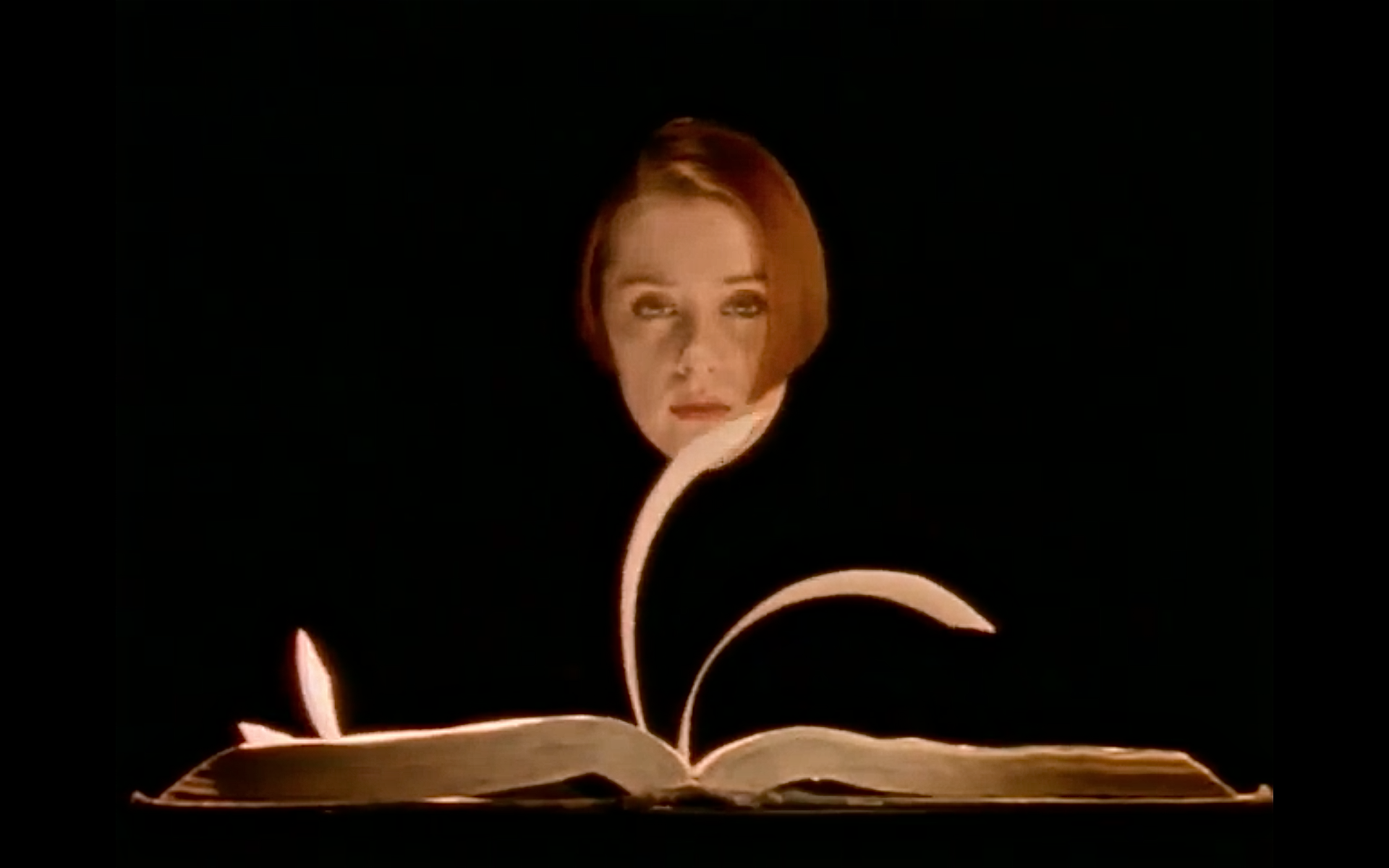
In the end I went with a track from Suzanne Vega’s third album, “Days of Open Hand”.  Released in 1990, it’s not to be confused with the Bruce Springsteen song of the same name from his tenth album, “Lucky Town”, or the Steve Miller Band’s tenth album, which like today’s selection is entitled “Book of Dreams”.

LISTEN TO TODAY’S SELECTION – Saturday 30 June

Book of Dreams

 In my book of dreams

In my book of dreams

In my book of dreams

I took your urgent whisper

Stole the arc of a white wing

Rode like foam on the river of pity

Turned its tide to strength

Healed the hole that ripped in living

In my book of dreams

In my book of dreams

In my book of dreams

 The spine is bound to last a life

Tough enough to take the pounding

Pages made of days of open hand

 In my book of dreams

In my book of dreams

In my book of dreams

 Number every page in silver

Underline in magic marker

Take the name of every prisoner

Yours is there my word of honor

 I took your urgent whisper

Stole the arc of a white wing

Rode like foam on the river of pity

Healed the hole that ripped in living

In my book of dreams

In my book of dreams

In my book of dreams