…and we opened a bottle of cider

Drawn from a group of University of Kent at Canterbury (England) musicians as well as members of the Duke’s Folk Club in Whitstable, the ever-changing line-up of Fiddler’s Dram had an enthusiastic following in the late ‘70s, playing regularly at local Canterbury area pubs.

In 1978 a “permanent” line-up released an album “To See the Play” which featured traditional English tunes along with today’s selection, written by Duke’s Folk Club member Debbie Cook, who subsequently went on to write scripts for “The Archers” (an ages-old BBC radio soap) and BBC TV’s “EastEnders”.

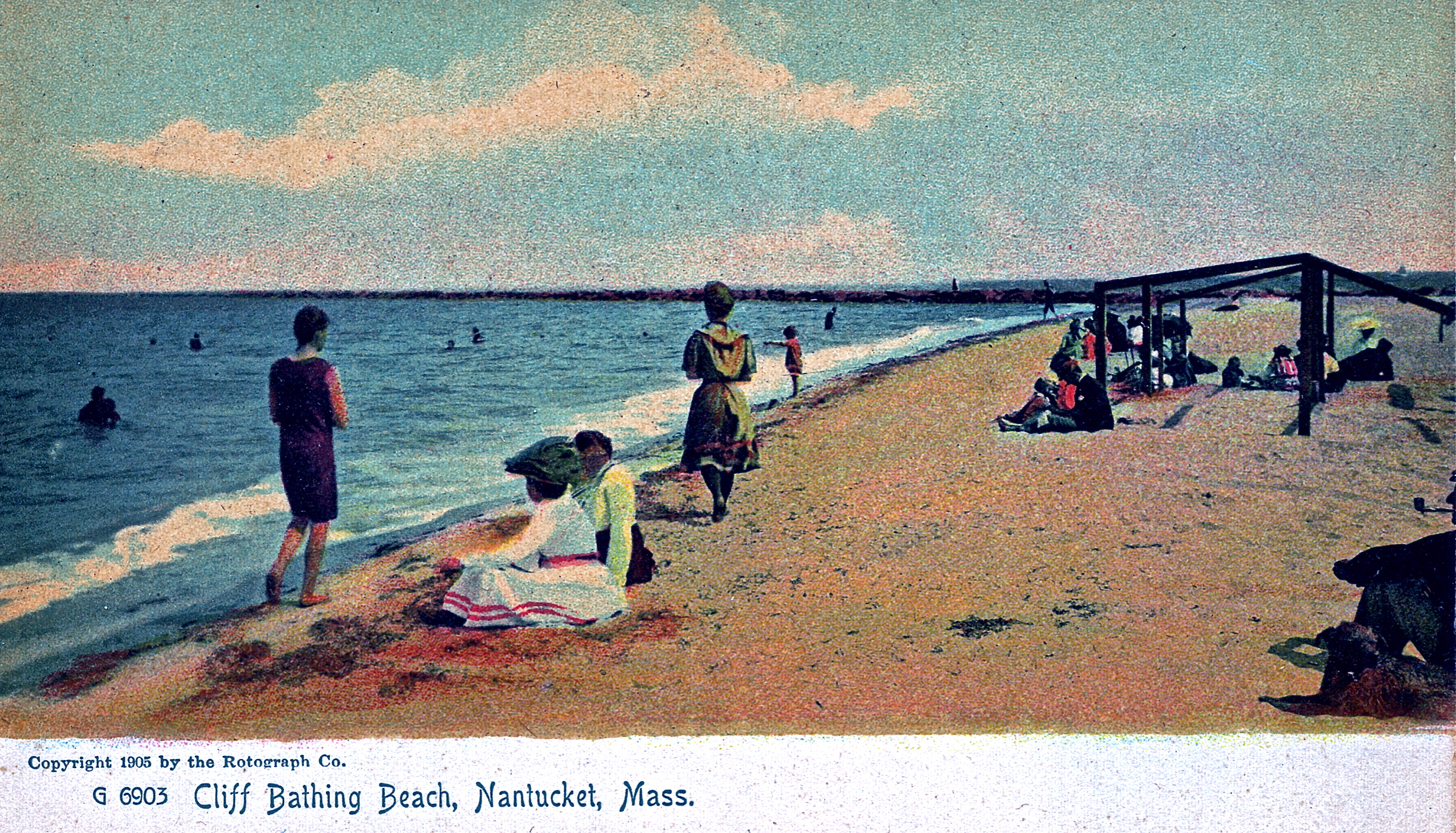
Apparently the song was inspired by a day trip to Rhyl, a seaside resort 35 miles east of Bangor, North Wales, but because Bangor had an extra syllable and slipped off the tongue more easily it was used instead. A great outcry from Rhyl councilors and businesses is said to have ensued after the song reached Number 3 on the UK Singles Chart because the publicity would surely have boosted the tourist economy.

Although the group quickly released an eponymous follow-up album, they were unable to achieve any further recording success. “Day Trip To Bangor” according to the fiddler, “was the kind of success you don’t easily recover from. Fiddler’s Dram did one more tour then gratefully took the money, and the gold discs, and ran.”

LISTEN TO TODAY’S SELECTION – Saturday 21 July 

Day Trip to Bangor

 Didn’t we have a lovely time the day we went to Bangor?

A beautiful day, we had lunch on the way

And all for under a pound you know

But on the way back I cuddled with Jack

And we opened a bottle of cider

Singing a few of our favourite songs

As the wheels went ‘round.

 Do you recall the thrill of it all as we walked along the seafront?

Then on the sand we heard a brass band

That played the “Diddlely-Bump-Terrara”

Elsie and me had one cup of tea

Then we took a paddler-boat out

Splashing away as we sat on the bay

And the wheels went ’round

Didn’t we have a lovely time the day we went to Bangor?

A beautiful day, we had lunch on the way

And all for under a pound you know

But on the way back I cuddled with Jack

And we opened a bottle of cider

Singing a few of our favourite songs

As the wheels went ‘round

Wasn’t it nice, eating chocolate ice as we strolled around the fun fair?

Then we ate eels in the big Ferris wheel

As we sailed around the ground but then

We had to be quick ’cause Elsie felt sick

And we had to find somewhere to take her

I said to her lad, what made her feel bad

Was the wheel goin’ ’round

 Didn’t we have a lovely time the day we went to Bangor?

A beautiful day, we had lunch on the way

And all for under a pound you know

But on the way back I cuddled with Jack

And we opened a bottle of cider

Singing a few of our favourite songs

As the wheels went ‘round
 Elsie and me, we finished our tea and said goodbye to the seaside

Got on the bus, Flo said to us

Oh isn’t it a shame to go

Wouldn’t it be grand to have cash on demand

And to live like this for always

Oh it makes me feel ill, when I think of the mill

And the wheels goin’ ’round

 Didn’t we have a lovely time the day we went to Bangor?

A beautiful day, we had lunch on the way

And all for under a pound you know

But on the way back I cuddled with Jack

And we opened a bottle of cider

Singing a few of our favourite songs

As the wheels went ‘round
…I see trouble on the way

In 1964 an up and coming “juke box standards band” from the Bay Area town of El Cerrito, were offered a record deal by Fantasy Records, an independent jazz label looking to add some rock n’ roll groups to its catalogue.  They called themselves The Blue Velvets and consisted of three guys named, Doug, Stu and John, who had known one another since junior high school, along with John’s older brother Tom who served as lead singer.

When it came time to release the band’s first single one of the label owners asked them to change their name to the Golliwogs (in reference to character featured in a series of 19th Century children’s books popular in England, which then became a popular doll and jam manufacturer “mascot” while also serving as precursor to the offensive racial slur, “wog”) in the belief that it would help to tap into the British Invasion fad then sweeping the States. A number of singles followed, all of them local.

In 1967 Fantasy Records was sold. By this time (younger brother) John, who had begun to write all the group’s material had moved over to lead vocalist, while Tom concentrated on rhythm guitar.  The new owner was impressed and presented them with an opportunity to record a full-length album…if only they would change that name.

There was certainly no argument from the band and to make it interesting they opted to combine a number of elements: Tom had a friend named Credence Newball, whose name they always liked, and for good measure they decided to add in an extra ‘e’ so that it resembled the word “creed”.  Next, they snagged the word “Clearwater” from an Olympia Beer commercial, and lastly they threw in the word “Revival” referring to what they felt was a new commitment to the band.

The resulting 1968 debut album, “Creedence Clearwater Revival” attracted a great deal of national attention with keen musicianship all around, and songwriter, Fogerty’s penchant (despite his Northern California upbringing) for Deep Southern imagery and a “swamp/roots rock” sound. CCR (for short) was well on its way.

Today’s selection, which reached Number 2 on the U.S. Billboard Charts and Number 1 on the UK Singles Chart, was featured on CCR’s third studio album, “Green River” released in 1969.  According to Fogerty the inspiration for writing it came about while he was watching the 1941 film, “The Devil and Daniel Webster,” which features a hurricane scene that got him to thinking about “the apocalypse soon to be visited upon us.”

Although the song’s refrain is “there’s a bad moon on the rise,” it is often misheard as “there’s a bathroom on the right,” and Fogerty himself regularly parodies the mondegreen (“the mishearing or misinterpretation of a phrase as a result of near homophony”) by singing the misheard version in live performance.

 LISTEN TO TODAY’S SELECTION – Friday 20 July

Bad Moon Rising

 I see the bad moon arising.

I see trouble on the way.

I see earthquakes and lightning.

I see bad times today.

 Don’t go around tonight,

Well, it’s bound to take your life,

There’s a bad moon on the rise.

 I hear hurricanes ablowing.

I know the end is coming soon.

I fear rivers over flowing.

I hear the voice of rage and ruin.

 Don’t go around tonight,

Well, it’s bound to take your life,

There’s a bad moon on the rise.

All right!

 Hope you got your things together.

Hope you are quite prepared to die.

Looks like we’re in for nasty weather.

One eye is taken for an eye.

 Don’t go around tonight,

Well, it’s bound to take your life,

There’s a bad moon on the rise.

Don’t go around tonight,

Well, it’s bound to take your life,

There’s a bad moon on the rise.

“There’s a Bathroom on the Right”

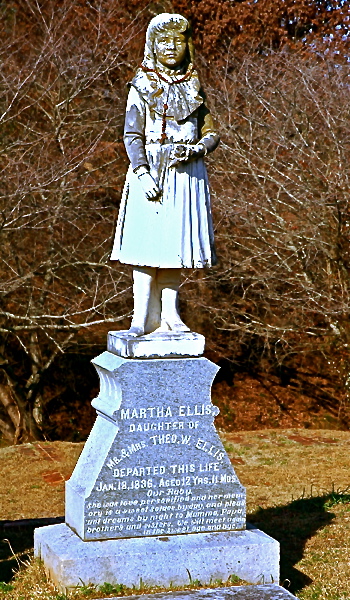
…Little Martha

As my sources are admittedly im-peach-able, I’ll only report what I solemnly surmise.  It’s an undisputed fact that the legendary Southern Rock/Blues Allman Brothers Band was the final act at Fillmore East (as in New York’s East Village) before that one-time Second Avenue Yiddish Theater, with the incredible acoustics, closed for good in June 1971.

It’s also a fact that the band’s breakthrough album “At Fillmore East” (recorded that spring) was released just a few weeks later and would become certified gold within months, when the Allman Brothers were well-along in producing their definitive follow-up album.

And it’s an incredibly sorrowful fact that slide-guitar-extraordinaire (and big brother to Gregg) Duane Allman was on his way to becoming one of the greatest guitarists of all time when he was thrown from his motorcycle on a sloping road near his Macon, Georgia home.

By all accounts Allman was prone to breaking the speed limits and when he crested the hill he was confronted with a flatbed lumber truck (it’s an urban legend that it was a peach truck) stopping to make a turn directly in front of him. But as he swerved to go around, his motorcycle hit a sharp dip in the road causing him to lose control and…after the bike landed on him he never regained consciousness.  He was 24.

Although the band had decided to carry on and finish the album, no one was happy with the proposed title, “The Kind We Grow in Dixie”.  Then someone noticed the peach on the already-completed artwork for the album cover and remembered something Duane had said in an interview shortly before his death.  “There ain’t no revolution. It’s evolution, but every time I’m in Georgia I eat a peach for peace.”

Released in early 1972, one writer (Greil Marcus) described, “Eat a Peach” as an “after the-the-rain celebration…ageless, seamless…front-porch music stolen from the utopia of shared southern memory.”  Partially recorded live/partially studio-recorded, the album was big on innovation and featured a number of acoustic melodies, including today’s selection, which was recorded by Allman a few weeks before the accident and is considered by acoustic virtuoso (and one of our favorites) Leo Kottke, to be “the most perfect guitar song ever written.”

Evidently influenced by Jimi Hendrix, whom he had met in New York, and the only track on the album that he had solely written, Duane Allman claimed to have intended it as an ode to his girlfriend, Dixie Meadows.  However, the namesake for “Little Martha” was twelve year old, Martha Ellis (1824-1836), whose distinctive memorial he encountered during his regular visits to Macon’s Rose Hill Cemetery.

Before the song’s 1972 release Allman himself would be buried at Rose Hill, as would bandmate Berry Oakley, who also perished on a motorcycle at the age of 24, later that year.

LISTEN TO TODAY’S SELECTION – Thursday 18 July 

…just another life to live

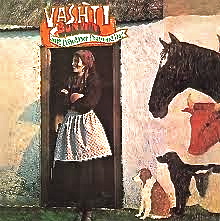
Here’s Vashti Bunyan, born in London in 1945 and purportedly a descendent of (“Pilgrims Progress”) John Bunyan.  Expelled from The Ruskin School, Oxford for failing to show up to class, she travelled to New York at the age of 18 and, after hearing “The Freewheelin’ Bob Dylan” decided to become a musician.

Back in London (with the opportune assistance of Rolling Stones manager, Andrew Oldham) she released a few singles under the name of Vashti before opting to travel with her boyfriend, by horse and cart, to the Hebridean Islands and join their friend Donovan (yes, that Donovan) at a commune he’d been organizing.

During the trip she wrote a number of songs that eventually became her (delightful) debut album “Just Another Diamond Day” backed by members of Fairport Convention and The Incredible String Band, along with the string arranger for Nick Drake’s first two albums.

Released in 1970 the album sold very few copies and the discouraged Bunyan abandoned her musical career to move to Ireland, raise three children and tend to her livestock. But unbeknownst to Bunyan “Just Another Diamond Day” slowly gained a cult following and in an astonishing twist, became one of the most sought-after records in history, with an original copy fetching $2,000 on eBay.

The album was re-released on CD in 2000 (today’s selection is the opening track) and after thirty years hiatus, Vashti Bunyan (whom some call the “Godmother of Freak Folk”), successfully rekindled her career as a recording artist.

 LISTEN TO TODAY’S SELECTION – Wednesday 18 July

Diamond Day

 Just another diamond day

Just a blade of grass

Just another bale of hay

And the horses pass.

 Just another field to plough

Just a grain of wheat

Just a sack of seed to sow

And the children eat.

 Just another life to live

Just a word to say

Just another love to give

And a diamond day

…I got troubles, whoa-oh

Perhaps you remember this catchy song, and perhaps it has come to your mind too, when confronted through the years with … the occasional spot of bother.

“You Were on My Mind” was written by Sylvia Tyson in 1964, which she performed with her husband Ian, as the Toronto based folk-duo, Ian & Sylvia on their 1964 album, “Northern Journey”. The following year the San Francisco-based We Five took it up-tempo and topped the Billboard Chart for five straight weeks.

Formed by University of San Francisco student, Michael Stewart, whose older brother, John was a member of the Kingston Trio, the ensemble originally played everything from Rock ‘n Roll and Jazz to Broadway show tunes and Disney hits. Featuring both acoustic and electric guitars and best remembered for its members’ multi-part harmonies, We Five began to add Folk-Rock numbers to its repertoire in the summer of ’65 after the (L.A. based) Byrds had begun to meld Folk with Rock to hugely popular effect.

This was a wise choice as the ever-entrepreneurial Herb Alpert, who owned A&M Records, was seeking to round out his label’s existing line-up (which included Brasil ’66 and of course Tijuana Brass) with artists that represented the new genre; so We Five had itself a record deal and the group’s first album, “You Were on My Mind” was released that fall.

Now cited as San Francisco’s original Folk-Rock band, the group was soon performing on such national shows as Shindig, American Bandstand and Hullabaloo and would go on to record five additional albums, scoring hits with “Let’s Get Together” (later covered by the Jefferson Airplane and the Youngbloods), “Cast Your Fate to the Wind” and “The First Time Ever I Saw Your Face”, years before  Roberta Flack’s spine-chilling version.

We Five was also the first Folk-Rock (or even Rock) group to write and perform music for Coca Cola as a side venture, leading the way for such other prominent acts as: the Four Seasons, Jefferson Airplane, the Turtles, the Stone Ponies, the Monkees, Grass Roots, the Box Tops, Vanilla Fudge, Canned Heat, Iron Butterfly, Three Dog Night and the Beach Boys.

Say, maybe that’s why she went to the corner….    

LISTEN TO TODAY’S SELECTION – Tuesday 17 July

You Were On My Mind

 When I woke up this morning

You were on my mind

And you were on my mind

I got troubles, whoa-oh

I got worries, whoa-oh

I got wounds to bind

 So I went to the corner

Just to ease my pains

Yeah, just to ease my pains

I got troubles, whoa-oh

I got worries, whoa-oh

I came home again

 When I woke up this morning

You were on my mi-i-i-ind

And you were on my mind

I got troubles, whoa-oh

I got worries, whoa-oh

I got wounds to bind

 And I got a feelin’

Down in my sho-oo-oo-oes

Said, way down in my sho-oo-oes

Yeah, I got to ramble, whoa-oh

I got to move on, whoa-oh

I got to walk away my blues

 But I woke up this morning

You were on my mind

You were on my mind

I got troubles, whoa-oh

I got worries, whoa-oh

I got wounds to bind

…I might be prejudiced but it’s true, I love New England best

Known for its rolling hills, majestic mountains and jagged coastline, not to mention its colorful autumns, brisk winters and sultry summers, New England is the only multi-state region (the U.S. Census Bureau acknowledges nine regional divisions) that does not derive its name from its geography.  With the Mayflower Compact serving as its first governing document, its name was officially sanctioned in 1620 when a Royal Charter for the Plymouth Council of New England was established to govern and colonize the region.

When all six states are combined, the region is larger than (Olde) England, but just barely bigger than the state of Washington. Making up nearly half of the total area, Maine is only the 39th largest state, just behind Indiana.  The remaining five New England states are among the nation’s smallest, including Little Rhodey, “the” smallest.

And yet this New England is big on cultural identity, with a unique blend of agrarianism and industrialism, Puritanism and liberalism, isolationism and open mindedness. Although now considered to be the least religious region in the United States, as some of us are sure to remind you, it was here that some of the great movements in literature, education and philosophy found their origins.  Many a song of praise has been written about the splendid allure of this Old Yankee (as opposed to ‘Damn Yankee”) land, including today’s selection.

When last we looked in on Jonathan Richman (born in Natick, Massachusetts in 1951) he and his Velvet Underground inspired Modern Lovers were going “faster miles an hour” with “the radio on!” as they performed “Roadrunner”, recorded in various versions (but not released) in the early ‘70s. Eventually the band collapsed over musical differences and an inability to land a record contract and their best recordings didn’t come to light until 1976 with the release of a post-breakup-debut album “The Modern Lovers” with several tracks becoming Top Ten hits in the (New-Wave era) UK, where Richman was celebrated as a punk rock progenitor.

By this time Richman had moved to Berkeley, California and put together a new, mellower, more-acoustic version of the Modern Lovers, that combined calypso lyricism with ‘50s era Rock n Roll. With the critical attention received by the original band’s album, he and the new group released the 1977 album “Jonathan Richman and the Modern Lovers” only a few months later. Recorded far from Richman’s “home”, today’s selection with sentiments shared by many a New Englander, was one of the featured tracks.

 LISTEN TO TODAY’S SELECTION – Monday 16 July

New England

 See, I come from Boston

I’m gonna tell you about how I love New England

It’s my favorite place

I’ve been all around the world, but I love New England best

I might be prejudiced

But it’s true, I love New England best

Well, now…

You know, ladies and gentlemen, I’ve already been to Paris, I already been to Rome

And what did I do but miss my home?

I have been out west to Californ’.

But I miss the land where I was born.

I can’t help it.

Dum-de-dum-de-dum-dum-da-dum-day

Oh, New England.

Dum-de-dum-de-dum-dum-da-dum-day

Oh, New England.

I have seen old Israel’s arid plain.

It’s magnificent, but so’s Maine.

Dum-de-dum-de-dum-dum-da-dum-day

Oh, New England.

Dum-de-dum-de-dum-dum-da-dum-day

Oh, New England.

Doddly-doodly-do-do-doo-do-do

Doddly-doodly-do-do-doo-do-do

Doddly-doodly-do-do-doo-do-do

Doddly-doodly-do-do-doo-do-do Dum-de-dum-de-dum-dum-da-dum-day

Oh, I love New England.

Dum-de-dum-de-dum-dum-da-dum-day

Oh, New England.

Dum-de-dum-de-dum-dum-da-dum-day

Oh, New England.

Dum-de-dum-de-dum-dum-da-dum-day

Oh, New England.

Dum-de-dum-de-dum-dum-da-dum-day

Oh, New England.

Dum-de-dum-de-dum-dum-da-dum-day

Oh, New England.

Dum-de-dum-de-dum-dum-da-dum-day

Oh, New England.

Dum-de-dum-de-dum-dum-da-dum-day

Oh, New England.

…go ahead and bite it, I bet you’d be delighted

“But of the tree of the knowledge of good and evil, thou shalt not eat of it: for in the day that thou eatest thereof thou shalt surely die.” Genesis 2:17 (King James Version)

Metaphorically speaking, since that Edenic moment when Eve convinced Adam to partake in the fruit of the Tree of Knowledge, “forbidden fruit” has been defined as a forbidden object of desire, with part of its appeal coming from the very comprehension that one seriously shouldn’t have it, whether the indulgence is immoral, illegal, indecent or merely injurious.

A remarkable array of potential forbidden fruits have been posited through the years, starting most notably with the apple, which may actually have been chosen as a result of some confusion during the Latin translation of the Bible in the late 4th Century, between the noun “mălum” which means evil and the noun “mālum” which was derived from the Greek word for apple. The “Adam’s apple” which is a popular name for the larynx, comes to us based on the notion that it is emblematic of the forbidden fruit protruding from Adam’s throat as he swallowed.

While many believe that the quince, which pre-dates the apple is the actual fruit, some Hebrew and Slavonic texts state that the fruit was actually a grape, which was later changed into something good, just as the serpent was changed by losing its legs and speech. Other Rabbinic traditions hold wheat as the actual fruit because the Hebrew word for wheat is “khitah” which can be interpreted as a pun on “khet” which is the word for sin.

As the word for tomato in some Slavic languages means “paradise” there are some who believe it to be the offending fruit, especially since it was once believed to be poisonous and therefore had a forbidden past. Then there are those who hold the fig as the culprit as it has long been a symbol for female sexuality.  This opinion is most famously represented on a ceiling fresco in the Sistine chapel.

However, another famous fresco, in France’s 13th Century Plaincourault Abbey, depicts Adam and Eve next to a Tree of Knowledge that looks like an “Amanita Muscaria,” the type of psychoactive mushroom that comes to mind when one thinks of Alice in Wonderland. Not nearly as fanciful but also offered up as candidates are: the pomegranate, the carob, the pear, the (dry) citron, the leafy datura and the grapefruit.

No matter your particular interpretation, as Oscar Brown Jr. surmised, the “fall of man” makes a fine subject for a song and Nina Simone agreed with him, naming her fourth studio album, “Forbidden Fruit,” after Brown’s song in 1960, and featuring her cover version as the final track.

Nina, as you’ll recall, was a piano player, singer and performer “separately and simultaneously,” moving from gospel to blues to jazz to folk to Bach-style counterpoint fugues and especially to the genre that provided her with her memorable marque, the High Priestess of Soul.

 LISTEN TO TODAY’S SELECTION – Sunday 15 July

Forbidden Fruit

 Eve and Adam had a garden, everything was great

Till one day a boy says pardon, Miss my name is snake

See that apple over yonder, if you’ll take a bite

You and Adam both are bound to have some fun tonight

Go on and eat, forbidden fruit

It’s mighty sweet, forbidden fruit

It’s quite a treat, forbidden fruit

Go ahead and taste it, you don’t wanna waste it

 The Lord had said in the beginning, everything here’s free

Except that apple, it leads to sinning, so let that apple be

But Eve got tempted so she tried it and as all chicks do

Teased her man ‘till he decided he’d just try some too

Go on and eat, forbidden fruit

It’s mighty sweet, forbidden fruit

It’s quite a treat, forbidden fruit

Go ahead and bite it, I bet you’d be delighted

 I hate to tell you all what followed, the Lord was most upset

Saw them making love and hollered what have you to “et”

And when they made a full confession, the Lord said hmmm I see

I guess I’ll have to teach you a lesson about not minding me

Go on and eat, forbidden fruit

It’s mighty sweet, forbidden fruit

It’s quite a treat, forbidden fruit

You all went and did it, now you’re gonna get it

The Lord made Eve, Adam’s madam, had his kids and all

Placed some labor laws on Adam and he made the snake to fall

Ever since the days of Eden, folks been sinful my

Nowadays they’re even eating apples in their pie

Go on and eat, forbidden fruit

 It’s quite a treat, forbidden fruit

It’s mighty sweet, forbidden fruit

Go ahead and taste it, you don’t wanna waste it

Oh go ahead and bite it, I bet you’d be delighted

You always did it, now you’re gonna get it

Forbidden fruit

…wow too much of a girl

His pioneering use of stereo recording was the stuff of legend.  On occasion, as in today’s selection, he would feature two entire bands recording simultaneously in separate studios to afford a rather stunning effect (especially if one’s stereo speakers are wide apart) with the chorus and bass briskly alternating sides.

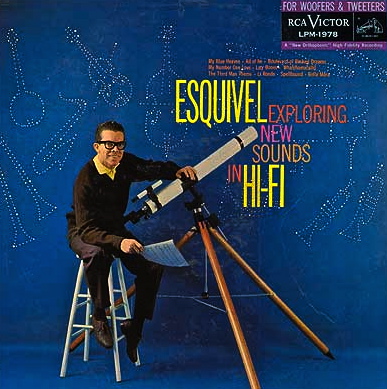
Sometimes referred to as the Busby Berkley of Cocktail Music, but more often called the King of Space Age Pop, Mexican born Juan Garcia Esquivel, aka Esquivel, first saw the light of day in 1918 in Tampico, Tamaulipas, and moved with his family to México City where he studied at the National Autonomous University of México.

The King of Space Age Pop

Easily the leading proponent of that late’50s-early ‘60s quirky instrumental Space Age Bachelor Pad genre, Esquivel had a highly idiosyncratic musical style (including the use of nonsense vocals such as “pow” and “zu-zu”) that combined Latin, jazz and lounge music.  Meticulously arranged and composed by Esquivel himself, there was never room for improvisation.

Such perfectionism extended to Esquivel concerts, which pioneered the use of elaborate light shows.  In the early ‘60s he and his orchestra often opened for Frank Sinatra in Las Vegas.

Intriguingly the last album released in his lifetime (he died in 2002 at the age of 83) was “See It In Sound” in 1998, which was actually recorded in 1960 but unreleased by the record company as it wasn’t seen as commercially viable.  An especially fascinating track is a bar-hopping version of “Brazil” played as a musical soundscape with the band playing different renditions of the song at each bar.  A YouTube URL of the song can be found at the end of this post.

As mentioned, today’s selection, “Mucha Muchaca” features two entire bands recording simultaneously in separate studios to create extraordinary stereo effects in the age of Hi-Fi. First featured on Esquivel’s 1962 album, Latin-Esque, and later included in a 1994 compilation of his work (which, in our case, would invariably get “shouted down” if one had the audacity to try and sneak it onto the car’s CD player during the occasional family outing), “Space Age Bachelor Pad Music”.

 LISTEN TO TODAY’S SELECTION IN STEREO – Saturday 14 July

Mucha Muchaca

 Hello Muchacha

Oh hello Muchacha

No, no me Muchacho

You Muchacha

You know like me Tarzan

You Jane

Me Muchacho

You Muchacha

Oh you Muchacho

Me Muchacha

Wow too much of a girl

MUCHA MUCHACHA!!!

~

…knock a little louder baby!

After yesterday’s R.E.M. feature, mention was made of “the other band from Athens, GA” and that’s all the motivation we need to haul out one of the all-time great summer Friday night dance songs, inspired in part by an actual shack on Jefferson Road, not all that far from the University of Georgia.

Formed one October night in 1976 when brother and sister, Cindy and Ricky Wilson, and some of their musician friends shared a few specialty ‘Flaming Volcano’ cocktails at a local Chinese Restaurant, which led to an impromptu jam session, the resulting ensemble began to practice in earnest, and played their first real gig at a Valentine’s Day party the following year.

Rounded out by Kate Pierson, Keith Strickland and (cowbell player and vocalist) Fred Schneider, the band went for a quirky, New Wave combination of surf and dance music that was characterized by Ricky Wilson’s oddball guitar tunings and Schneider’s  “sprechgesang” vocals (featuring rapid, loose, speech-like articulation).  Considering their predilection for “thrift-shop chic,” they decided to name themselves after Southern slang for a beehive hairdo, which to some resembles the nose cone of a B-52.

Quickly gaining a local following, the B-52s soon began to take road trips to New York for weekend gigs at such venues as CBGBs and, with their outrageous performances and “stream of consciousness” songs, attracted a following there as well. “We always appealed to people outside the mainstream,” said Pierson, “and I think more people feel outside the mainstream these days.”

The biggest crowd-pleaser in those days became their first (independently released) single in 1978, the garage party classic “Rock Lobster”.  A record deal soon followed, and their debut album, The B-52’s was released to the world in ’79 with an extended version of their hit song.  Intriguingly, that track was cited as a catalyst for John Lennon (whose music career was on hiatus while he helped to raise his son, Sean) to return to the studio.  “It sounds just like Ono’s music, so I said to me-self, it’s time to get out the old axe and wake the wife up!” he said during an interview after the release of (his final album) “Double Fantasy”.

Like most of the group’s early songs, “Rock Lobster” was conceived at the rustic (i.e. no appliance’s, no running water) cabin on Jefferson Road that Kate Pierson rented for $15 a month between 1973 and 1979.   Capped by a rusting tin roof, the shack would serve as an inspiration for today’s selection.

Featured on the group’s fifth studio album, Cosmic Thing (a comeback album of sorts in 1989 after the AIDS related death of Ricky Wilson) “Love Shack” was also inspired by any number of “down-home, throw-down, disco juke joints that you would find in the rural South,” as well as a 1969 Temptations song called “Psychedelic Shack,” containing the lyric, “Psychedelic Shack, that’s where it’s at.”

The B-52s first million copy seller and easily their biggest hit, “Love Shack” was also their first single to reach the Billboard Top 40 charts, peaking at Number Three and reaching the Number Two singles spot in the UK.  Years later it would become the first publicly ripped and played song using iTunes software.

And what about “Tin roof, rusted!” which is prominantly wailed out by lead singer, Cindy Wilson?  According to the Urban Dictionary it means that one is pregnant, but Fred Schneider insists it means nothing at all and that it was just something she yelled when they came to a break during recording.  Everyone liked it so they stuck with it.

As for Pierson’s cabin, it burned down in 2004 long after she’d moved on.  Still, the song remains the same on dance floors throughout the world….

LISTEN TO TODAY’S SELECTION – Friday 13 July

Love Shack

 If you see a faded sign by the side of the road that says

15 miles to the… Love Shack! Love Shack yeah

I’m headin’ down the Atlanta highway,

Lookin’ for the love getaway

Heading for the love getaway, love getaway,

I got me a car, it’s as big as a whale

And we’re headin’ on down

To the Love Shack

I got me a Chrysler, it seats about 20

So hurry up and bring your jukebox money

 The Love Shack is a little old place

Where we can get together

Love Shack baby, Love Shack bay-bee.

Love baby, that’s where it’s at

Ooo love baby, that’s where it’s at

Sign says…stay away fools,

‘Cause love rules at the Lo-o-ove Shack!

Well it’s set way back in the middle of a field,

Just a funky old shack and I gotta’ get back

Glitter on the mattress

Glitter on the highway

Glitter on the front porch

Glitter on the hallway

The Love Shack is a little old place

Where we can get together

Love Shack bay-bee! Love Shack baby!

Love Shack, that’s where it’s at!

Huggin’ and a kissin’, dancin’ and a lovin’,

Wearin’ next to nothing

Cause it’s hot as an oven

The whole shack shimmies, ya the the while shack shimmies!

The whole shack shimmies when everybody’s

Movin’ around and around and around and around!

Everybody’s movin’, everybody’s groovin’ baby!

Folks linin’ up outside just to get down

Everybody’s movin’, everybody’s groovin’ baby

Funky little shack! Funk-y little shack!

Hop in my Chrysler,

it’s as big as a whale

and it’s about to set sail!

I got me a car, it seats about twenty

So c’mon and bring your jukebox money.

The Love Shack is a little old place

Where we can get together

Love Shack baby! Love Shack bay-bee!

(Love Shack…Love Shack…)

Love Shack, that’s where it’s at!

Bang bang bang on the door baby!

Knock a little louder baby!

Bang bang bang on the door baby!

I can’t hear you

Bang bang on the door baby

Bang bang on the door

Bang bang on the door baby

Bang bang

You’re what?… Tin roof, rusted!

 Love Shack, baby Love Shack!

Love Shack, baby Love Shack!

Love baby, that’s where it’s at

Love Shack, baby Love Shack!

Love baby, that’s where it’s at

Huggin’ and a kissin’,

Dancin’ and a lovin’ at the love shack


…nightswimming deserves a quiet night

Back in 1980 one of Michael Stipe’s favorite haunts was the Wuxtry Record Shop. An art major at the University of Georgia (UGA), Stipe especially liked such “protopunk” artists as The Velvet Underground, Television and Patti Smith, which even in a college town like Athens (at the time) was unusual enough for the counter clerk to take notice.  A fellow UGA student named Peter Buck, the clerk happened to share Stipe’s distinctive taste in music and the two became friends.

As both were musicians they decided to give song writing a go, and then after meeting fellow student/musicians Mike Mills and Bill Berry, who also enjoyed their brand of music, they decided to form a band.  “There was never any grand plan behind any of it,” said Stipe about the four musical collaborators, who played their first show at a friend’s birthday party held in a converted church.  After considering such names for the band as Twisted Kites, Cans of Piss, and Negro Wives, Stipe randomly selected something from the dictionary that appealed to everyone: R.E.M.

With a few more gigs under their belt, the group established a local following and each dropped out of school to focus on their music, leading to the release of their debut single, “Radio Free Europe”  (with an independent record label) in 1981.  The song swiftly became a college radio success and after a notable concert opening for The Police, R.E.M. landed a major record deal.  Their 1983 debut album, “Murmur” would go on to win the Rolling Stone Critics Poll Album of the Year over Michael Jackson’s “Thriller” and the former UGA boys were on their way.

Featured as a track on “Automatic for the People”, R.E.M.’s eighth album, in 1992, today’s seasonal selection harkens back to those early years.  Mainly written by Mike Mills (most of the group’s songs were collaborative efforts with credit shared by all), it was “based on true events.”  According to Mills after the Athens, Georgia clubs had closed the members of the band often went skinny-dipping to cool down, and were regularly joined by “any number of these same 50 people. It was a very tight circle of friends.”

Recorded at Criteria Studios in Miami, with Stipe as vocalist, the recording also features former Led Zeppelin bassist John Paul Jones and oboist Deborah Workman, with Mills (elatedly) playing the same piano used by Derek and the Dominos on that classic recording of “Layla”.

LISTEN TO TODAY’S SELECTION – Thursday 12 July  

Nightswimming

 Nightswimming deserves a quiet night

The photograph on the dashboard, taken years ago

Turned around backwards so the windshield shows

Every streetlight reveals the picture in reverse

Still, it’s so much clearer

I forgot my shirt at the water’s edge

The moon is low tonight

 Nightswimming deserves a quiet night

I’m not sure all these people understand

It’s not like years ago

The fear of getting caught

Of recklessness and water

They cannot see me naked

These things, they go away

Replaced by everyday

 Nightswimming, remembering that night

September’s coming soon

I’m pining for the moon

And what if there were two

Side by side in orbit

Around the fairest sun?

That bright, tight forever drum

Could not describe nightswimming

 You, I thought I knew you

You I cannot judge

You, I thought you knew me

This one laughing quietly underneath my breath

Nightswimming

 The photograph reflects

Every streetlight a reminder

Nightswimming deserves a quiet night, deserves a quiet night