…when she dances it goes and goes

Eve is a twofold mystery.” ~ Elizabeth Barrett Browning

 “If there hadn’t been women we’d still be squatting in a cave eating raw meat, because we made civilization in order to impress our girlfriends.  And they tolerated it and let us go ahead and play with our toys.” ~ Orson Welles

After yesterday’s pean to timid/impudent young men I thought it best to select something that relates to the youthful years of humanity’s better half, because in the words of Margaret Thatcher, the Iron Maiden herself,“The cocks may crow, but it’s the hen that lays the egg.”

According to singer/songwriter, Vanessa Carlton, today’s selection is about “the journey of one girl and her perception of her environment and how she starts out as a wide-eyed person, but everyone gets hardened by life, but not necessarily to the point where you can’t feel anymore.”

Born in 1980 in Milford, Pennsylvania and an alumna of the School of American Ballet, Carlton began performing in Manhattan clubs and bars while a student at Columbia University.  Her break came when she met a record producer at a singer-songwriter circle meeting, who invited her to make a demo. The demo led to a recording contract and her 2002 debut album, “Be Not Nobody” (featuring “A Thousand Miles” which reached Number Five on the Billboard Charts) was certified platinum (a million record sales) in less than a year.

Co-written with singer/songwriter, Stephan Jenkins (who also produced it), “White Houses” was included on Carlton’s second album, “Harmonium” in 2004. Lindsey Buckingham of Fleetwood Mac played acoustic guitar on the track after Jenkins happened to meet him outside the studio and invited him to join the session.  “He just came in, played this great riff, recorded it and then he left.  It all happened very fast and turned out amazing,” said a bemused Jenkins.

Although not a commercial success upon its release, “White Houses” has grown to become a “cult classic” among teenagers (I can attest to that).  Better still, it provided the inspiration for “Building White Houses,” a 2004/5 drive to raise funds for Habitat for Humanity.

LISTEN TO TODAY’S SELECTION – Friday 26 April

White Houses

Crashed on the floor when I moved in

This little bungalow with some strange new friends

Stay up too late, and I’m too thin

We promise each other it’s ’til the end

Now we’re spinning empty bottles

It’s the five of us

With pretty eyed boys girls die to trust

I can’t resist the day

No, I can’t resist the day

 Jenny screams out and it’s no pose

‘Cause when she dances she goes and goes

Beer through the nose on an inside joke

And I’m so excited, I haven’t spoken

And she’s so pretty, and she’s so sure

Maybe I’m more clever than a girl like her

Summer is all in bloom

Summer is ending soon

 It’s all right and it’s nice not to be so alone

But I hold on to your secrets in white houses

Maybe I’m a little bit over my head

I come undone at the things he said

And he’s so funny in his bright red shirt

We were all in love and we all got hurt

I sneak into his car’s cracked leather seat

The smell of gasoline in the summer heat

Boy, we’re going way too fast

It’s all too sweet to last

It’s all right

And I put myself in his hands

But I hold on to your secrets in white houses

Love, or something ignites in my veins

And I pray it never fades in white houses

My first time, hard to explain

Rush of blood, oh, and a little bit of pain

On a cloudy day, it’s more common than you think

He’s my first mistake

Maybe you were all faster than me

We gave each other up so easily

These silly little wounds will never mend

I feel so far from where I’ve been

So I go, and I will not be back here again

I’m gone as the day is fading on white houses

I lied, wrote my injuries all in the dust

In my heart is the five of us

In white houses

 And you, maybe you’ll remember me

What I gave is yours to keep

In white houses
 

…like nothin’ else to make you feel sure you’re alive

Young men are pretty much the same everywhere, I guess. They never have their wits about them. They never mean what they say, because they don’t understand the use of words. They are generally half impudent and half timid … Indeed there is no such thing as a young man, for a man is not really a man till he is middle-aged.” – The Duke’s Children (1879) Anthony Trollope 

Born in the Philadelphia suburb of Upper Darby in 1948, Todd Harry Rundgren had some success as a teen with his garage rock group, the Nazz.  A fine songwriter and multi-instrumentalist, he was influenced instrumentally (and production-wise) by mid/late ‘60s British groups like The Who, Pink Floyd, The Beatles and Cream and vocally by the likes of The Beach Boys, Gilbert & Sullivan, classic Rock n’ Roll and by Broadway musicals.  His major inspiration however, at least early-on, was the great Laura Nyro.

“I knew her fairly well,” he once said. “I actually had arranged a meeting (in 1968), just because I was so infatuated with her and I wanted to meet the person who had produced all this music. We got along, and we were kind of friendly, and actually, after I met her the first time, she asked me if I wanted to be her bandleader. But the Nazz had just signed a record contract and I couldn’t skip out on the band, even though it was incredibly tempting.”

Actually, breaking it off with the Nazz came the following year and Rundgren, who’d considered working as a computer programmer, learned how to engineer and master his own records, becoming a well respected and accomplished producer, not only for his own projects but (through the years) for numerous others too, including albums by: The Band, Bad Finger, Grand Funk Railroad, Hall & Oates, Ian and Sylvia, Meat Loaf, Patti Smith, The Tubes, XTC and Cheap Trick.

In 1970 he formed his next band, Runt with (what a kick!) Soupy Sales’ two sons, Hunt and Tony and released a debut album that some maintain is the group’s debut (the name of the album was also Runt) while others refer to it as Rundgren’s debut solo album as he not only wrote, produced and sang the songs, he also played many of the instruments as well, including keyboards and guitars.  Rundgren alone is pictured on the album cover and, when reissued, his name received the sole artist credit.

The third track of Runt, and today’s selection about timid/impudent young men everywhere, who never quite “mean what they say because they don’t understand the use of words,” hit Number 20 on the Billboard Charts.

LISTEN TO TODAY’S SELECTION – Thursday 26 April 

We Gotta’ Get You a Woman

 Leroy, boy, is that you?

I thought your post-hangin’ days were through

Sunkin’ eyes and full of sighs

Tell no lies, you get wise

I tell you now we’re gonna pull you through

There’s only one thing left that we can do

 We gotta’ get you a woman

It’s like nothin’ else to make you feel sure you’re alive

We gotta’ get you a woman

We better get walkin’, we’re wastin’ time talkin’ now

 Leroy, boy, you’re my friend

You say how and I’ll say when

Come and meet me down the street

Take a seat, it’s my treat

You may not ever get this chance again

That empty feeling’s just about to end

Talkin’ ’bout life and what it means to you

It don’t mean nothin’ if it don’t run through

I got one thing to say, you know it’s true

You got to find some time to get this thing together

 We gotta’ get you a woman

It’s like nothin’ else to make you feel sure you’re alive

We gotta’ get you a woman

We better get walkin’, we’re wastin’ time talkin’ now

Talkin’ ’bout things about that special one

They may be stupid but they sure are fun

I’ll give it to you while we’re on the run

Because we ain’t got time to get this thing together, ’cause we

Got to get together with a woman who has been around

One who knows better than to let you down

Let’s hope there’s still one left in this whole town

And that she’ll take some time to get this thing together

We gotta’ get you a woman

And when we’re through with you

We’ll get me one too

…runnin’ from the cold up in New England

Jay Ketcham “Ketch” Miller Secor had a plan. “I had just read the book, Bound for Glory, and I knew that I wanted to go hobo with music. So we went out on the road,” he recounted.

Ketch, a fiddle player since seventh grade, had learned to play the banjo while at Phillips Exeter in New Hampshire (established by John Phillips, yes there IS a tie to rival Phillips Andover, which was established by his nephew, Samuel Phillips Jr.) and he used his folks’ Harrisonburg, Virginia home as his base for a series of “musician-hobo jaunts” with some friends, up to Maine and Canada.

In time sensibility reigned, in the form of his long-standing girlfriend, Lydia who was now a student at Cornell, so Ketch enrolled at nearby Ithaca College and brought along his old musician pal, Critter Fuqua (nope, not making this stuff up).  In Ithaca Ketch and Critter discovered a passel of like-minded string-picking “Americana” musicians and decided to form a band.

But after Lydia broke off the relationship, Ketch decided to hit the road again and convinced the others to join him.  Calling themselves Old Crow Medicine Show (O.C.M.S.) they recorded a cassette tape they could sell (using Critter’s bedroom as their studio) and headed north, busking their way across Canada before circling back through the States and ending up in the Appalachian town of Butler, Tennessee with a full repertoire of bluegrass, blues and folk numbers.

You will be pleased to know that upon graduating Lydia had a change of heart and after getting his address from his parents she showed up at Ketch’s cabin door early one morning. Soon after they were married (she is now an award winning writer) and soon after that the group received an invitation to play at the MerleFest Music Festival in Wilkesboro, North Carolina, where they were a hit.  Having released seven albums, Old Crow Medicine Show has been a staple at music festivals throughout the world ever since.

Composed of two parts, with one written by Ketch Secor, today’s selection is the group’s signature song.  Interestingly the other part was written five years before Secor was born.  Even more interestingly it was written by Bob Dylan.

“I heard a Dylan song that was unfinished back in high school and I finished it,” said Secor.  “As a serious Bob Dylan fan, I was listening to anything he had put on tape, and this was an outtake of something he had mumbled.”

What Dylan had “mumbled” during one of the 1973 recording sessions for the Pat Garrett and Billy the Kid movie soundtrack, became the chorus for the song, “Wagon Wheel”  and Secor added additional “autobiographical” verses between the refrain.

“I sang it all around the country from about 17 to 26, before I ever even thought, ‘oh I better look into this,” said Secor, who decided to seek a copyright before the group included the song on its 2004 (full-length) debut album “Old Crow Medicine Show”. In doing so he discovered that Dylan had already credited the phrase “Rock me, Mama” to pre-war bluesman Arthur “Big Boy” Crudup, who himself had likely taken it from an early Big Bill Broozny recording.  In the end Secor and Dylan signed a co-writing agreement for “Wagon Wheel” with official credits going to Dylan/Secor.

LISTEN TO TODAY’S SELECTION – Wednesday 25 April

Wagon Wheel

Headed down south to the land of the pines

And I’m thumbin’ my way into North Caroline

Starin’ up the road

Pray to God I see headlights

 I made it down the coast in seventeen hours

Pickin’ me a bouquet of dogwood flowers

And I’m a hopin’ for Raleigh

I can see my baby tonight

 So rock me mama like a wagon wheel

Rock me mama anyway you feel

Hey mama rock me

Rock me mama like the wind and the rain

Rock me mama like a southbound train

Hey mama rock me

 Runnin’ from the cold up in New England

I was born to be a fiddler in an old-time string band

My baby plays the guitar

I pick a banjo now

Oh, the North Country winters keep a gettin’ me now

Lost my money playin’ poker so I had to up and leave

But I ain’t a turnin’ back

To livin’ that old life no more

 So rock me mama like a wagon wheel

Rock me mama anyway you feel

Hey mama rock me

Rock me mama like the wind and the rain

Rock me mama like a southbound train

Hey mama rock me

 Walkin’ to the south out of Roanoke

I caught a trucker out of Philly

Had a nice long toke

But he’s a headed west from the Cumberland Gap

To Johnson City, Tennessee

 And I gotta’ get a move on before the sun

I hear my baby callin’ my name

And I know that she’s the only one

And if I die in Raleigh

At least I will die free

 So rock me mama like a wagon wheel

Rock me mama anyway you feel

Hey mama rock me

Rock me mama like the wind and the rain

Rock me mama like a southbound train

Hey mama rock me

…milk truck hauls the sun up

Due mainly to a lack of reliable refrigeration it wasn’t all that long ago that those who didn’t live on a farm had their milk delivered.  Many homes even had a “milk chute” with a small cabinet on the outside, where the milkman would place the bottles, and a door on the inside so that the resident could retrieve the milk without having to go outside.

Although I don’t recall those icebox days, I do remember having the milk delivered in recyclable glass bottles, along with other dairy products, right up into my high school years.  Mind you, we were clearly part of a shrinking market. Blame the ubiquity of refrigerators, improved disposable packaging, the additional cost of residential delivery and even the potential for theft from the milk chute or front door stoop, but delivered milk is now a thing of the past in many places, except apparently in the UK where after years of decline milk floats are on the rise again in light of environmental awareness and interest in fresh, organic nutrition.

As morning provides the biggest demand for milk, a milkman’s day was an early one, hence the term “in with the milk” for those who notoriously stayed out so late that they were able to carry in the dairy delivery upon their return. But for most, the idea was to have the milk there, along with the morning paper, when you woke up, which is why the first four (stream of conscious) lines of today’s selection still remain clever.

Unlike many of his early songs, which were first recorded by other artists, “Living Without You” was first heard on Randy Newman’s eponymous debut album in 1968.  Unfortunately “Randy Newman” was so poorly received upon its release that the label (Warner) offered buyers the opportunity to trade it for something else in the company’s catalog.  Needless to say, it went out of print and remained so until it was re-released on CD in the mid-‘90s. But it still had a following, including Mary McCaslin, who released her own version of “Living Without You” on her 1974 record, “Way Out West.”

Known for her distinctive vocal style, McCaslin is also regarded as a pioneer of open guitar tunings (where the strings are tuned so that a chord is achieved without the need to fret or press any of the strings) and as many will recall, back in the ‘70s we’d keep an eye out for the times that she and her husband, Jim Ringer (they were nicknamed “the Bramble and the Rose”) would come to Club Passim in Harvard Square.

Although Jim’s long gone (died in 1992 at the age of 56) Mary McCaslin still tours ‘round the coffee house circuit…and no one can get that milk truck to haul the sun up like she can.

  LISTEN TO TODAY’S SELECTION – Tuesday 24 April

Living Without You

 Milk truck hauls the sun up

The paper hits the door

The traffic shakes my floor

I think about you

Time to face the dawning gray

Of another lonely day

And it’s so hard

Living without you

And It’s so hard

So hard

And it’s so hard

Living without you

Everyone has got something

And they’re all trying to get some more

They got something to get up for

Well I ain’t about to

Nothin’s gonna happen

Nothin’s gonna change

And it’s so hard

Living without you

And it’s so hard

So hard

And it’s so hard

Living without you

…lions and tigers watching

Here’s to my Uncle John who died at the age of 94 on Saturday.  I wish everyone could have such an uncle.  A long-standing English Literature professor, he was a recognized authority on John Ruskin, the Victorian art critic and social thinker.

Once while staying at Venice’s La Calcina Pensione, where Ruskin himself had resided for a number of months in 1877, I sent my Uncle John and Aunt Betty a postcard with the silly quip: “Here I am surrounded by The Stones of Venice.”  Referring to one of Ruskin’s best-known works, it was a joke I knew that they (at least) would find amusing.

And for much of my adult life, that’s the kind of correspondence we had (perhaps a few times a year) and for which I shall be forever grateful.  His richly, entertaining letters on the nature of things were “pass around” examples of wit and erudition, which I deeply inhaled.  That I was able to even attempt to match them with letters of my own was a tremendous way to advance my writing skills, with the happy benefit of remaining in touch.

Yes, he was an authority on Ruskin but his great love (except for my Aunt Betty of course) were the works of Thomas Hardy.  One of the great “Naturalistic” writers, who depicted a literary world where one’s heredity and social environment greatly influence one’s character.  I guess the same could be said for Uncle John.

Born, John Lewis Bradley in London 1917, he attended London’s Highgate School and went on to earn degrees in English Literature at Yale and Harvard. In 1941 he joined the British Naval Intelligence Service, serving in California and New York prior to transferring to the Royal Canadian Air Force in 1943 (the year he and my aunt were married), with numerous sorties over Germany as a Wellington navigator-bombardier beginning in 1944.

After receiving his PhD from Yale at war’s end he began to teach, and there he was truly in his element, working his way up to full professorship (and a Guggenheim Fellowship) with years spent at: Wellesley, Western Reserve, University of Maryland, Clark University, Mount Holyoke, Ohio State, University of South Carolina and eventually Durham University back in England, where he chaired the English Department.

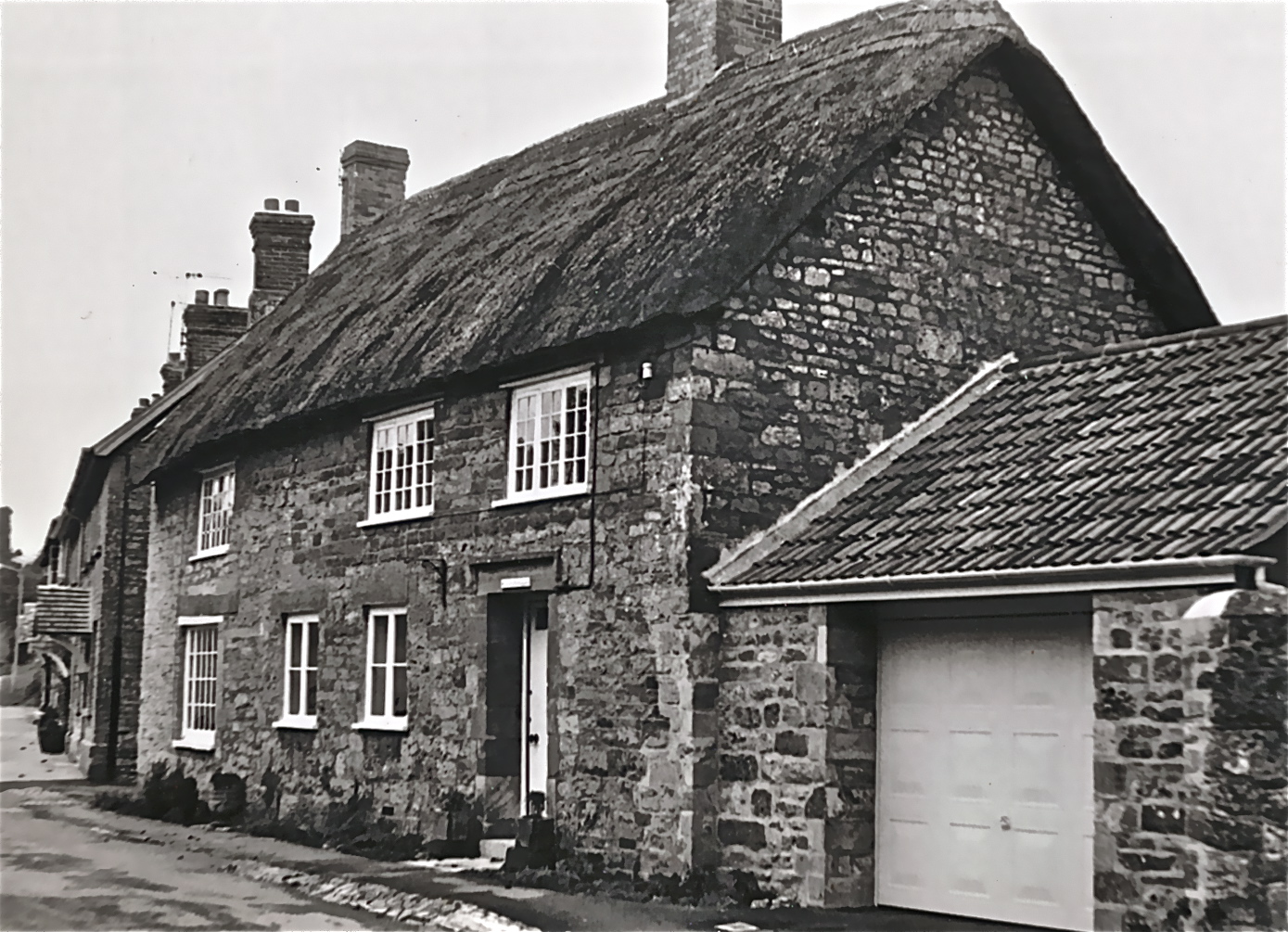
When he and Aunt Betty retired in 1982 they moved south into a delightful thatched roof cottage in the picturesque village of Hinton St. George, Somerset where he could continue his research and writing in the depths of “Hardy Country.”

Church Cottage, Hinton St. George (taken during my black & white phase) was a delightful place to visit.

After they’d both turned 90, they relocated to Pasadena, California to be near my cousin (their daughter) and their grandson.  It was a major switch from rural Somerset, where Uncle John was known to all as “the professor,” but at least he’d seen a bit of nearby Hollywood in the past…

If like me you’re one to leap ahead, you’ve no doubt figured out today’s selection and I expect you’re wondering what “Animal Crackers in My Soup” (hardly a “Naturalistic” classic) has to do with such a man as John Bradley.  Well, with lyrics by Irving Caeser and Ted Koehler and music by Ray Henderson, it was introduced to the world by Shirley Temple in the 1935 film “Curly Top” and the man holding the baton as musical director was none other than Uncle John’s father, Oscar Hambleton Bradley.

Also born in London his was a musical upbringing that led to an eminent career as conductor/musical director for the Ziegfeld Follies, as well as numerous Broadway and Hollywood musicals, including “Curly Top.”  

As I see it, if even in a very small way, this silly song (and others like it) helped to finance an education that sparked a decidedly precious enthusiasm for literature, language, music and especially for teaching. And that enthusiasm stands out as a singular rivulet in my own life’s edification. I’ll say it again. I wish everyone could have such an uncle.

 LISTEN TO TODAY’S SELECTION – Monday 23 April

Animal crackers in my soup

Monkeys and rabbits loop the loop

Gosh oh gee but I have fun

Swallowing animals one by one

In every bowl of soup I see

Lions and Tigers watching me

I make ’em jump right through a hoop

Those animal crackers in my soup

When I get hold of the big bad wolf

I just push him under to drown

Then I bite him in a million bits

And I gobble him right down

When they’re inside me where it’s dark

I walk around like Noah’s Ark

I stuff my tummy like a goop

With animal crackers in my soup

Animal crackers in my soup

Do funny things to me

They make me think my neighbourhood

Is a big menagerie

For instance there’s our Janitor

His name is Mr. Klein

And when he hollers at us kids

He reminds me of a Lion

 The Grocer is so big and fat

He has a big moustache

He looks just like a Walrus

Just before he takes a splash

Animal crackers in my soup

Monkeys and rabbits loop the loop

Gosh oh gee but I have fun

Swallowing animals one by one

In every bowl of soup I see

Lions and Tigers watching me

I make ’em jump right through a hoop

Those animal crackers in my soup

When I get hold of the big bad wolf

I just push him under to drown

Then I bite him in a million bits

And I gobble him right down

 When they’re inside me where it’s dark

I walk around like Noah’s Ark

I stuff my tummy like a goop

With animal crackers in my soup

 When they’re inside me where it’s dark

I walk around like Noah’s Ark

I stuff my tummy like a goop

With animal crackers in my soup

…the wide universe is the ocean I travel 


As with many “separatist” denominations, Unitarianism stretches back to the 16th Century.  But it didn’t get rolling’ round these New England parts until just after the American Revolution, when the once Anglican King’s Chapel in Boston (first gathered in 1686) officially accepted the Unitarian faith in 1785; a sensible move all things considered.

By then most New England congregations had evolved from Calvinist orthodoxy into a more Congregational Christianity but religious change remained in the air and many a spired church house housed a riven flock. While some still held to Trinitarianism (Father, Son and Holy Ghost) others asserted a unitary belief in God, hence Unitarianism.

By the time Harvard University (founded by Congregationalists) had become a bastion of Unitarian training in 1825, village greens throughout New England were seeing the building of new churches, sometimes Unitarian, sometimes Trinitarian, depending upon who got to keep the silverware.  It’s a squabble that continues.  While I’m a Unitarian-Universalist, my father was Congregationalist.  Then again his father was Unitarian.

Early Unitarians did not hold Universalist beliefs (which were specific about rejecting the Puritan emphasis of eternal damnation and instead asserted that “all are universally saved”).  But over time the two theologies grew to become nearly identical, with an emphasis on keeping “an open mind to the religious questions people have struggled with in all times and places” and the Unitarian Universalist Association (UUA) was formed in 1961.

Some creditable individuals can be identified as being Unitarian or Universalist (or Unitarian-Universalist), including: John Adams, Abigail Adams, John Quincy Adams, Louisa May Alcott, Ethan Allen, Susan B. Anthony, Bela Bartok, Clara Barton, Charles Bulfinch, E.E. Cummings, Charles Darwin, Charles Dickens, Ralph Waldo Emerson, Margaret Fuller, Buckminster Fuller, Horace Greeley, Linus Pauling, Florence Nightingale, Samuel Taylor Coleridge, Charles Elliott, Albert Schweitzer, Thomas Jefferson, W.M. Kiplinger, John Locke, Paul Newman, Christopher Reeve, Paul Revere, Malvina Reynolds, Arthur Schlesinger, Pete Seeger, Rod Serling, Kurt Vonnegut, William Carlos Williams, Frank Lloyd Wright…and today’s artist, Peter Mayer.

Based in Minnesota, Mayer studied Theology and music in college and served as a church music director for eight years, while performing at clubs and colleges, and writing and recording his own music.  He began to tour full time in 1995 and has since released nine CDs, having sold over 70 thousand copies of them independently. Today’s selection from his 2002 album, Earth Town Square, is now found in the UU hymnal supplement “Singing the Journey”

LISTEN TO TODAY’S SELECTION – Sunday 22 April

Blue Boat Home

Though below me, I feel no motion

Standing on these mountains and plains

Far away from the rolling ocean

Still my dry land heart can say

I’ve been sailing all my life now

Never harbor or port have I known

The wide universe is the ocean I travel

And the earth is my blue boat home

 Sun, my sail, and moon my rudder

As I ply the starry sea

Leaning over the edge in wonder

Casting questions into the deep

Drifting here with my ship’s companions

All we kindred pilgrim souls

Making our way by the lights of the heavens

In our beautiful blue boat home

 I give thanks to the waves upholding me

Hail the great winds urging me on

Greet the infinite sea before me

Sing the sky my sailor’s song

I was born upon the fathoms

Never harbor or port have I known

The wide universe is the ocean I travel

And the earth is my blue boat home

…and when force is gone, there’s always Mom

Well it’s official.  The US Postal Service has no official motto. The familiar line that many of us supposed was our mail carrier’s creed is actually an inscription engraved above the Corinthian colonnade of the James Farley Post Office in New York (designed by McKim, Mead & White to match the grand and beautiful Pennsylvania Station that once faced it).

The inscription was derived from The Histories of Herodotus, one of the earliest accounts of the rise of the Persian Empire (written between 450 and 420 BC) and a seminal work in Western literature. As such those persevering soles completing their appointed rounds in the snow, rain and gloom of night were actually ancient Persian couriers.

Not that it’s not an inspiring notion for our own hardworking postal workers.  It’s a fine thing to utilize such a line. Laurie Anderson certainly did, not only including it in today’s selection, but also interpreting it in American Sign Language for the accompanying music video, which was introduced at New York’s Museum of Modern Art (URL below).

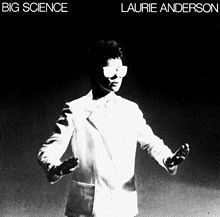
Written and first performed in 1981,“O Superman” was part of a larger work (“United States”) and released on Anderson’s debut album, “Big Science”.  Spoken through a vocoder, it’s actually a loose cover of the aria from Jules Massenet’s 1885 opera, Le Cid, with its first lines (“O Superman / O Judge / O Mom and Dad”) “echoing” the aria’s appeal (“Ô Souverain / ô juge / ô père”).

Later lines (“when love is gone, there’s always justice,” etc.)  are eclectically derived from the Tao Te Ching: “When Tao is lost, there is goodness. When goodness is lost, there is kindness. When kindness is lost, there is justice. When justice is lost, there is ritual. Now ritual is the husk of faith and loyalty, the beginning of confusion.”

Although the eight and a half minute performance-art piece was a huge hit in the UK (where it peaked at Number 2 on the Singles Charts), prior to its release Laurie Anderson was a little known artist…outside the art would that is.

Born in 1947 in Glen Ellyn, Illinois, Laura Phillips “Laurie” Anderson majored in art history, graduating magna cum laude and Phi Beta Kappa from Barnard College, with a Master’s of Fine Art in Sculpture from Columbia University for dessert.  A pioneer in electronic music (who invented a number of the musical instruments used in her shows and recordings) she worked as an art instructor, a magazine art critic and as a children’s book illustrator, while creating her early performance-art pieces.

By the mid-1980s Anderson had dropped “O Superman” from her repertoire and it was only at the suggestion of her husband (none other than Lou Reed of Velvet Underground fame) that she revived it in 2001 for a “retrospective” concert tour.  Needless to say, the newly-revived piece took on eery new significance (“here come the planes,” etc) after the events of September 11th that year and a live performance was recorded in New York the very next week.

LISTEN TO TODAY’S SELECTION – Saturday 21 April

 O Superman

 O Superman

O Judge

O Mom and Dad

Mom and Dad

O Superman

O Judge

O Mom and Dad

Mom and Dad

 Hi. I’m not home right now

But if you want to leave a message, just start talking at the sound of the tone

Hello? This is your mother

Are you there? Are you
coming home?

Hello? Is anybody home?

Well, you don’t know me,
but I know you

And I’ve got a message to give to you

Here come the planes

So you better get ready. Ready to go

You can come
 as you are, but pay as you go

Pay as you go

And I said: OK. Who is this really?

And the voice said: This is the hand, the hand that takes

This is the 
hand, the hand that takes

This is the hand, the hand that takes

Here come the planes

They’re American planes

Made in America

Smoking or non-smoking?

And the voice said: Neither snow nor rain nor gloom of night

shall stay these couriers from the swift completion of their appointed rounds.

 ‘Cause when love is gone, there’s always justice

And when justice is gone, there’s always force

And when force is gone, there’s always Mom

Hi Mom!

 So hold me, Mom, in your long arms

So hold me,
 Mom, in your long arms

In your automatic arms

Your electronic arms

In your arms

So hold me, Mom, in your long arms

Your petrochemical arms

Your military arms

In your electronic arms

  http://www.youtube.com/watch?v=-VIqA3i2zQw

…going faster miles an hour

Perhaps it’s the annoying fatigue, cloaked with an invariable sense of purpose, but far from a leisurely ride or everyday commute, a solitary, late night drive down the Interstate is a singular, utilitarian effort.  As a parent, a relative or a friend you’re bathed in darkness behind the wheel for circumstantial reasons. Sober reasons.

And yet that all-encompassing darkness ‘neath the dash is much the same as it was when you were in your teens (younger, perhaps than your kids are now!), when the solo late-night experience was fresh and anything but sobering with the whoosh of the wind amplified against the windows, the headlight-lanced highway straight ahead, the scent of dew through the vents and stale coffee in a discarded cup somewhere on the floor.

That “joyride era” for many of us occurred a handful of years after the Eisenhower Administration’s final push for high-speed roadways.  Suddenly metropolises everywhere seemed to be surrounded by four-lane beltways, allowing one to simply drive, with no destination and no particular purpose but to “motor-vate” onwards…with the radio on.

Which is another reason why I’ve long felt a kindredship with Jonathan Richman.  That and the fact that although he was born a number of years earlier than me (1951), we each first saw the light of day at Leonard Morse Hospital in Natick, Massachusetts. Richman wrote today’s selection in 1970, at about the same time that he formed his band, The Modern Lovers.

Decades later a journalist with The Guardian (an excellent British daily) wrote about her attempt to visit all the places mentioned in the various recorded versions of “Roadrunner” (and there are many), including the Stop & Shop and Howard Johnson’s in Natick, Rt. 128, the Mass ‘Pike, Deer Island, Quincy, Cohasset and the Prudential Tower (not all mentioned in this version), referring to it as “one of the most magical songs in existence.”

Others have also had success with the song, including the Sex Pistols as part of “The Great Rock & Roll Swindle” soundtrack; and it’s high praise indeed when that erudite, sophisticated aficionado, Johnny Rotten opines that he hates all music, except for “Roadrunner”

 LISTEN TO TODAY’S SELECTION – Friday 20 April

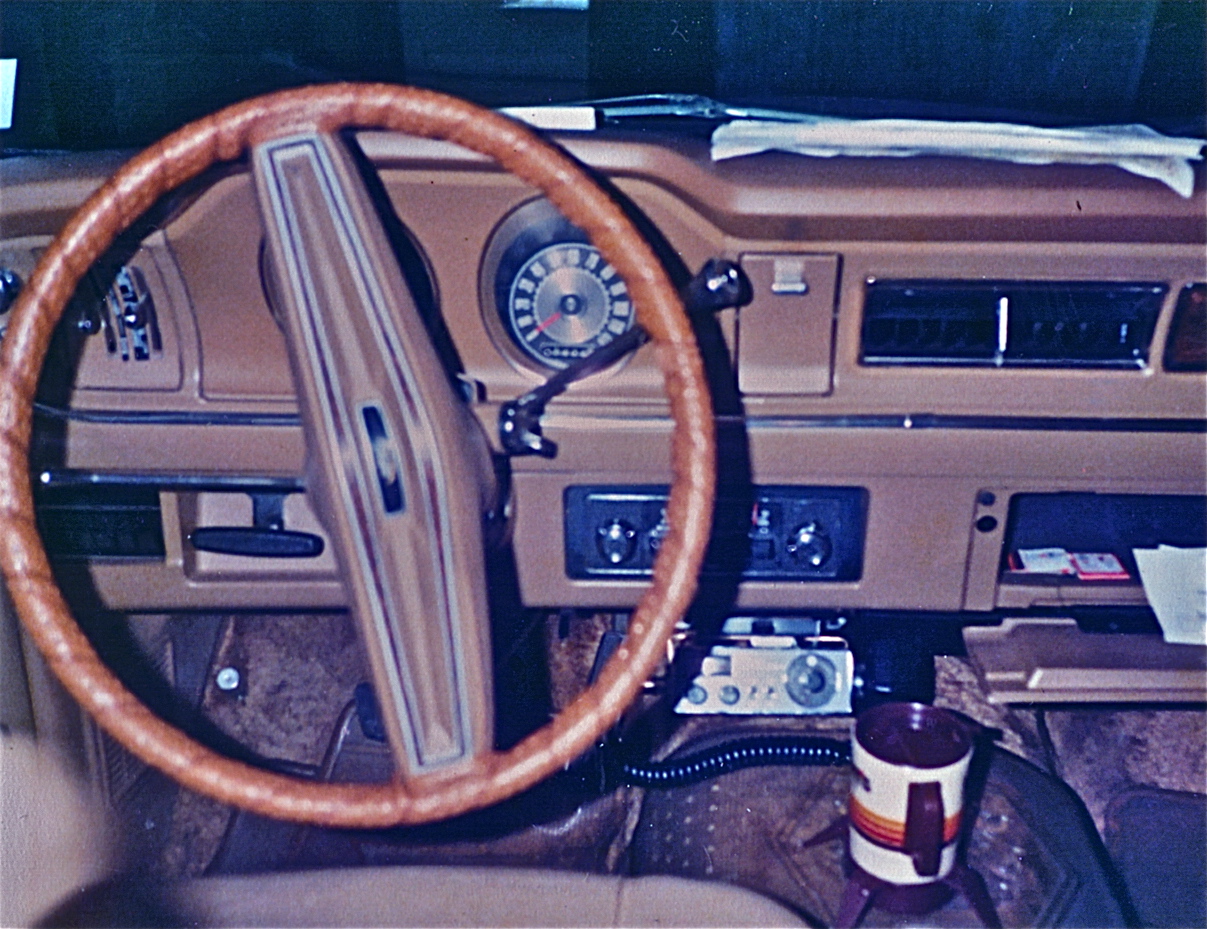
1969 Plymouth "Gold Duster" somewhere between San Francisco and Atlanta

1969 Plymouth “Gold Duster” somewhere between San Francisco and Atlanta.
Late at night on the Interstate and AM all the way.

Roadrunner

One two three four five six!

Roadrunner, roadrunner

Going faster miles an hour

Gonna’ drive past the Stop ‘n’ Shop

With the radio on

I’m in love with Massachusetts

And the neon when it’s cold outside

And the highway when it’s late at night

Got the radio on

I’m like the roadrunner

Alright

I’m in love with modern moonlight

128 when it’s dark outside

I’m in love with Massachusetts

I’m in love with the radio on

It helps me from being alone late at night

It helps me from being lonely late at night

I don’t feel so bad now in the car

Don’t feel so alone, got the radio on

Like the roadrunner

That’s right

 Said welcome to the spirit of 1956

Patient in the bushes next to ’57

The highway is your girlfriend as you go by quick

Suburban trees, suburban speed

And it smells like heaven

 I say roadrunner once

Roadrunner twice

I’m in love with rock & roll and I’ll be out all night

Roadrunner

That’s right

 Well now

Roadrunner, roadrunner

Going faster miles an hour

Gonna’ drive to the Stop ‘n’ Shop

With the radio on at night

And me in love with modern moonlight

 Me in love with modern rock & roll

Modern girls and modern rock & roll

Don’t feel so alone, got the radio on

Like the roadrunner

OK now you sing Modern Lovers

(Radio On!)

 I got the AM

 (Radio On!)

 Got the car, got the AM

 (Radio On!)

 Got the AM sound, got the

(Radio On!)

 Got the rockin’ modern neon sound

(Radio On!)

I got the car from Massachusetts, got the

(Radio On!)

 I got the power of Massachusetts when it’s late at night

 (Radio On!)

 I got the modern sounds of modern Massachusetts

 I’ve got the world, got the Turnpike, got the

I’ve got the, got the power of the AM

 Got the, late at night, rock & roll late at night

 The factories and the auto signs got the power of modern sounds

Alright

 Bye bye


…from now on that’s all I wanna’ do

Here’s Mr. and Mrs. Bramlett, aka. Delaney & Bonnie, husband and wife, songster and songstress. Born in 1939 in Pontiac County, Mississippi, Delaney moved to Los Angeles when he was 20 and became a session musician on the TV series, “Shindig”.  Bonnie (née Bonnie Lynn O’Farrell), who was born in 1944 in Alton, Illinois, was an accomplished singer by the time she was 15, when she became the first-ever white “Ikette” wearing a black wig and “Man Tan” skin darkener for the Ike & Tina Turner Revue.  She moved to L.A. in 1967, and that’s where she met and married Delaney.

Within a few years Delaney & Bonnie had some marginally recognizable names contributing to their Rock and Soul revue, including: Leon Russell (of course, that guy was everywhere), Rita Coolidge, Gram Parsons, Dave Mason, both Gregg and Duane Allman, King Curtis, George Harrison (using the pseudonym “Angelo Mysterioso”  it was Delaney who showed him how to play slide guitar) and their good friend, Eric Clapton, who once said,  “Delaney taught me everything I know about singing.”

Clapton took the Delaney & Bonnie ensemble on the road in 1969 as the opening act for Blind Faith, preferring their music to his own band’s. “For me, going on after Delaney & Bonnie was really, really tough, because I thought they were miles better than us,” said Clapton who continued to record and tour with them after the break up of Blind Faith.  They also toured with Janis Joplin, the Band and the Grateful Dead.

Known as a fine collaborative songwriter, Bonnie is co-credited with writing “Superstar” (that Carpenters hit) with Leon Russell, “Let it Rain” with Eric Clapton and today’s selection with her husband, Delaney Bramlett. Reaching Number 67 on the Billboard Singles Chart, “Never Ending Song of Love” was included on their 1971 album, “Motel Shot” which was mainly recorded “live” in the studio with acoustic instruments, a concept that pre-dated the “Unplugged” trend by decades.

 LISTEN TO TODAY’S SELECTION – Thursday 19 APRIL

Never Ending Song of Love

I’ve got a never-ending love for you

From now on that’s all I wanna do

From the first time we met I knew

I’d have never ending love for you

I’ve got a never ending love for you

From now on, that’s all I wanna do

From the first time we met I knew

I’d have a never ending love for you

 After all this time of being alone

We can love one another

Feel for each other

From now on

 It’s so good I can hardly stand it

Never ending love for you

From now on that’s all I wanna do

From the first we met I knew

I’d sing my never ending song of love for you

do do do do do do do do do do do do do do do….

 After all this time of being alone

We can love one another

Feel for each other

From now on

It’s so good I can hardly stand it

 Never ending love for you

From now on that’s all I wanna do

From the first we met I knew

I’d sing my never ending song of love for you

 I’ve got a never ending love for you

From now on that’s all I wanna do

From the first time we met I knew

I’d sing my never ending song of love for you

…with our hearts a thumpin’

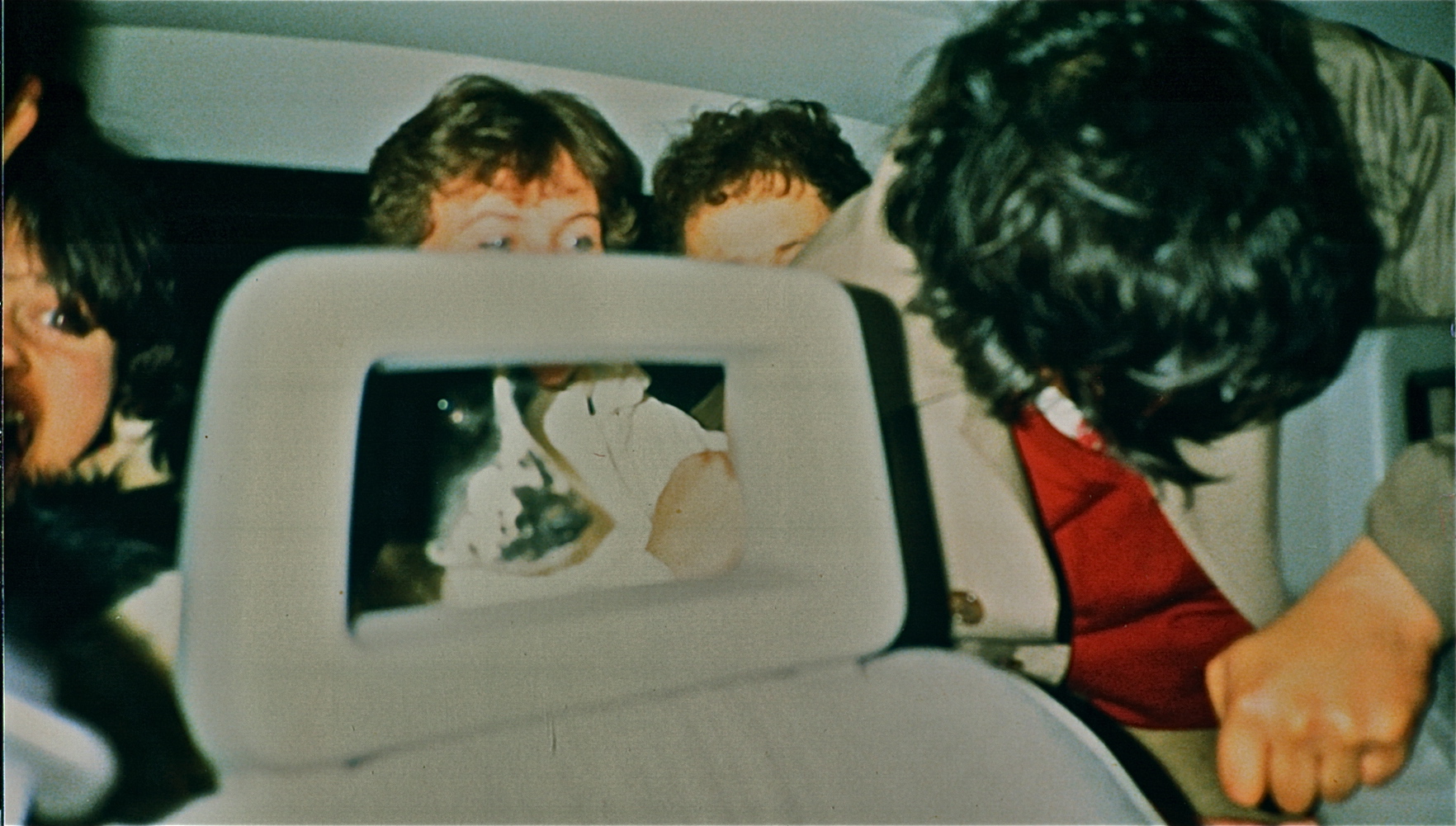
It’s Linda’s birthday, but (ever the sensible one) my wife does not like her picture posted, especially if it’s candid.  So I strategically chose the photo you see here, taken near the Herefordshire border, one April evening in 1986.  We were all on our way for some drinks at The Lion in Lentwardine, having just had some post-Point-to-Point drinks at Rad and Jen’s.  A Point-to-Point is basically a rural English steeplechase where betting (and yes the occasional drink) is warmly encouraged.

That’s Jules (there to the left) in the back seat of an Austin miniMetro five-door hatchback, along with Squiff the dog, our Linda, Giles (Emerson) and Giles’ then brother-in-law, Mike settling in on top.  Rad and Jen sat in the front passenger seat and – tellingly – I drove; presumably as I had least to lose (as a then-city dweller) if I lost my license.

That’s right, seven people and a Springer spaniel in a car built for four…and that British license is still valid to this day. I will state right here that Linda had little say in the matter (some way to woo a girl, eh?) but even though we’d just started dating I knew something then that has held true for decades (beyond her charm, wit and beauty of course) and that’s that my better half’s favorite song is Brown Eyed Girl.

Released as a single in 1967, and featuring the Sweet Inspirations on back-up vocals, today’s selection reached Number 10 on the U.S. Billboard Charts and is widely recognized as Van Morrison’s signature song. And yet because he hastily signed a solo recording contract without legal advice (his band, “Them” had just broken up) he fell prey to a penurious royalty agreement.  Couple that with “highly creative accounting” and Morrison claims never to have received any royalties for writing and recording the song. Nor is it among his favorites. “It’s not one of my best,” he once maintained.  “I mean I’ve got about 300 songs that I think are better.”

I know one person who doesn’t agree with him, and she’s not alone.  In the past 45 years Brown Eyed Girl has been covered by hundreds of bands and has earned a great deal of acclaim for the Belfast native, including plaques in both the Grammy Hall of Fame and The Rock and Roll Hall of Fame as well as elite positions on the BMI and the RIAA Greatest Songs of the Century lists.  All of which makes it easy to “remember when (especially on Linda’s birthday) we used to sing…..”

 LISTEN TO TODAY’S BIRTHDAY SELECTION – Wednesday 18 April

Brown Eyed Girl

Hey, where did we go

Days when the rains came?

Down in the hollow

Playin’ a new game

 Laughin’ and a-runnin’, hey hey

Skippin’ and a-jumpin’

In the misty mornin’ fog

With our, our hearts a-thumpin’

 And you, my brown eyed girl

You my brown eyed girl

And whatever happened

To Tuesday and so slow

Going down the old mine

With a transistor radio

 Standin’ in the sunlight laughin’

Hidin’ behind a rainbow’s wall

Slippin’ and a-slidin’

All along the waterfall

With you, my brown eyed girl

You my brown eyed girl

 Do you remember when

We used to sing?

Sha la la, la la, la la, la la, l-la te da

Just like that

Sha la la, la la, la la, la la, l-la te da

La te da

So hard to find my way

Now that I’m all on my own

I saw you just the other day

My, how you have grown

 Cast my memory back there Lord

Sometimes I’m overcome thinkin’ ’bout it

Makin’ love in the green grass

Behind the stadium

With you, my brown eyed girl

You my brown eyed girl

 Do you remember when

We used to sing?

Sha la la, la la, la la, la la, l-la te da

(Lyin’ in the green grass!)

Sha la la, la la, la la, la la, l-la te da

(Bit by bit by bit by bit by bit by bit)

Sha la la, la la, la la, la la, l-la te da

(Sha la la la la, la la la la, la te da, la te da, la te da, da da da)

Sha la la, la la, la la, la la, l-la te da